Author: Arch; Source: X, @ArchLending; Translated by: Shaw & Jinse Finance
For years, Bitcoin holders have been accused of acting prematurely, being paranoid, or chasing a speculative fantasy. Just days ago, the world's most influential leader, at the Munich Security Conference, effectively endorsed this view.
Ray Dalio, in an article now widely circulated online, explained bluntly: The world order established after 1945 has officially collapsed.
The old rules no longer apply, and for those who have been holding Bitcoin and wondering when the world will see what they've seen…
That moment has arrived.
This moment has arrived.
Every monetary system has its expiration date. History tells us that monetary systems do not last forever, but evolve along with the geopolitical order that underpins them. The gold standard gave way to the Bretton Woods system; the Bretton Woods system gave way to the petrodollar system. Each transition was chaotic, controversial, and only becomes apparent in hindsight. We may now be in one such transition period.
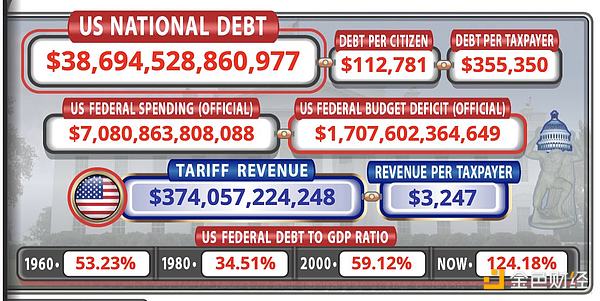
Fiscal deficits are widening in major economies, and central banks are grappling with a situation where the tools they have relied on for decades (low interest rates, quantitative easing, forward guidance) are becoming less effective while their side effects are increasing.
Meanwhile, currency itself is being used as a geopolitical tool in ways unimaginable to the previous generation. The freezing of Russia's central bank reserves in 2022 was a watershed moment because it revealed structural problems. Any country's reserves, if held within another country's financial system, could be cut off overnight. This understanding has reached not only Moscow, but also Riyadh, New Delhi, and the finance ministries of all sovereign nations. Bitcoin was not born for the old world. People often discuss Bitcoin from a price perspective, but its deeper significance lies in structural factors. It is the first monetary asset in history that is not controlled by any single country, institution, or alliance. In the old order, characterized by relatively stable alliances, predictable monetary policies, and widespread trust in institutions, these characteristics were theoretically interesting but not urgent. In this new order, defined by fragmented alliances, competing economic blocs, and the active weaponization of financial infrastructure, these characteristics become extremely useful. Bitcoin is a means of combating systemic instability stemming from the rewriting of the rules of the game. What forward-thinking holders are considering: The emerging world order creates a set of conditions favorable to assets with specific characteristics: Cross-border portability; Unmanipulated scarcity; Settlement without intermediaries; Neutrality unaffected by the foreign policy of any single government. Gold has played these roles for millennia, so it's no surprise that central banks have significantly increased their gold reserves in recent years. However, gold has limitations in a digital, interconnected world because it's difficult to transfer quickly, verification is costly, and it's impossible to send it over the internet in seconds. Bitcoin addresses all these limitations while retaining the core attribute that gives gold its enduring value: the enforced credible scarcity through means other than political will. For investors focused on long-term investments, the question is shifting from "Will Bitcoin rise?" to "In a world with a volatile monetary system, where should I store value to ensure no single actor can destroy it?" The transition will not be comfortable, but that doesn't mean the road ahead will be smooth. Geopolitical transitions are inherently volatile. Short-term declines, regulatory uncertainty, and shifting narratives are characteristic of these periods. However, it's necessary to distinguish between asset volatility and systemic fragility. Bitcoin is highly volatile, but as world leaders now acknowledge, the traditional financial order is fragile. These are two completely different things. Those who can successfully navigate this period are likely to be those who understand this distinction and can tolerate short-term discomfort, because they see a longer-term trend. Looking to the future, old assumptions such as the dollar's hegemonic status being taken for granted, stable alliances, and monetary policy being apolitical are being re-examined globally, and the final outcome is still being written. But one thing is becoming increasingly clear: in a world that is gradually moving away from centralized trust and towards multipolar competition, assets that do not require trust in any single counterparty are forward-looking assets. The world order is changing. A question worth considering is whether your positioning reflects the world of the past or the world that is forming.

 Anais
Anais
