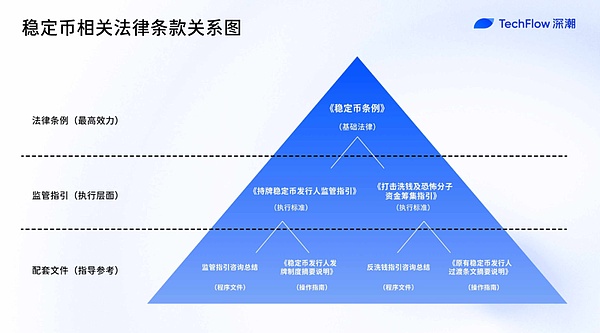
The explanatory document provides guidance on operational issues such as how to apply for a license, how the transition period will be arranged, and how regulators will enforce the law. The HKMA released six documents at once. For ease of reading, we will focus on the core implementation document: the "Guidelines for the Supervision of Licensed Stablecoin Issuers." This document details the specific compliance requirements for issuers and is crucial to the interests and operational path of market participants. If the Stablecoin Ordinance is the foundation for stablecoin issuance in Hong Kong, then the 89-page "Guidelines for the Supervision of Licensed Stablecoin Issuers" is more like the bricks and tiles that fill this building. From the HK$25 million capital threshold to the 12 specific requirements for private key management, the HKMA has outlined a regulatory framework that is both strict and pragmatic, using a nearly meticulous approach. Barriers to Entry: Not Everyone Can Play The minimum capital requirement of HK$25 million (approximately US$3.2 million) places it somewhere in the middle of the pack for global stablecoin regulation. By comparison, the EU's MiCA regulation sets a minimum capital requirement of €350,000 for issuers of electronic money tokens, while Japan's requirement is ¥10 million (approximately US$75,000). Hong Kong's threshold has clearly been carefully considered—ensuring sufficient financial strength for issuers without completely shutting out innovators. But capital is only the first hurdle. Of greater concern is the "fit and proper person" requirement. The regulatory guidelines devote an entire chapter to detailing seven key considerations: from criminal records to business experience, from financial status to time commitment, even a director's "external positions" are taken into account. In particular, the requirement that independent non-executive directors must comprise at least one-third of the board directly aligns with the governance standards of listed companies.
This means that if you want to issue a stablecoin in Hong Kong, you must not only have money, but also the "right people". A Web3 startup composed of technology geeks may need to significantly adjust its governance structure and introduce professionals with a traditional financial background in order to meet regulatory requirements.
Even stricter are the restrictions on business activities. License holders must obtain the written consent of the HKMA before conducting any "other business activities." This basically positions stablecoin issuers as "specialized institutions," similar to traditional payment institutions or electronic currency issuers. For those project parties who hope to build a closed loop of the "DeFi+stablecoin" ecosystem, this is undoubtedly a signal that they need to reconsider their business model.
Reserve Management: 100% is Just the Starting Point
In the management of reserve assets, Hong Kong has adopted a dual insurance model of "100% + over-collateralization."
Regulatory guidelines clearly require that the market value of reserve assets must "at all times" be at least equal to the face value of the stablecoins in circulation, while also "taking into account the risk profile of the reserve assets to ensure appropriate over-collateralization."
What exactly is this "appropriate"? The guidelines don't give specific figures, but regulations requiring licensees to set internal limits on market risk indicators and conduct regular stress testing indicate that regulators clearly expect issuers to dynamically adjust excess collateralization ratios based on their own risk profiles. This "principles-based" regulatory approach provides issuers with a certain degree of flexibility, but also means higher compliance costs—you need to establish a comprehensive risk assessment system to demonstrate your "suitability." Hong Kong has demonstrated a cautious, but not conservative, approach to the definition of eligible reserve assets. In addition to traditional options such as cash and short-term bank deposits, the regulatory guidelines also explicitly accept "eligible assets in tokenized form." This leaves room for future innovation—in theory, tokenized U.S. Treasury bonds and tokenized bank deposits could become eligible reserve assets. However, the most striking feature is the trust segregation arrangement. For example, licensees must establish "effective trust arrangements" to ensure that reserve assets are legally segregated from their own assets and obtain independent legal advice to verify the effectiveness of such arrangements. This is not a simple accounting segregation; rather, it is to ensure that the rights and interests of stablecoin holders are protected even if the issuer goes bankrupt. Regarding transparency requirements, Hong Kong has adopted a combination of "frequent disclosure + regular audits." Issuers must publish the market value and composition of their reserve assets weekly, with independent auditors verifying this information quarterly. In contrast, even USDC, which has a higher level of compliance, currently only publishes reserve reports monthly. Hong Kong's requirements will undoubtedly significantly enhance the transparency of stablecoins.
Technical requirements: Private key management is very professional
On private key management, a risk point unique to Web3, the regulatory guidelines have demonstrated surprising professionalism:
From key generation to destruction, from physical security to leak response, the 12 specific requirements cover almost every aspect of the private key life cycle. For example, "important private keys must be used in an isolated environment" - this means that the private keys used to mint and destroy stablecoins cannot access the Internet and must be operated in a completely offline environment; "The use of keys requires authorization from multiple people" - no single individual can use the key private key alone; "The key storage medium must be placed in a place approved by Hong Kong or the HKMA" - this also directly rules out the possibility of hosting private keys overseas. These requirements demonstrate that the HKMA isn't simply applying traditional financial regulation; rather, it truly understands the characteristics and risks of blockchain technology. To some extent, this guidance can be seen as a regulatory version of "Best Practices for Enterprise-Level Private Key Management." The requirements for smart contract audits are equally stringent. Issuers must engage a "qualified third-party entity" to audit smart contracts when they are deployed, redeployed, or upgraded, ensuring that the contracts are "correctly executed," "conform to their intended functionality," and "provide a high degree of confidence that there are no vulnerabilities or security flaws." Given the nascent nature of the smart contract auditing industry, defining "qualified" may be a practical challenge. Regarding customer authentication, regulatory requirements reflect the integration of Web3 and traditional KYC. On the one hand, issuers must complete "relevant customer due diligence" before providing services; on the other hand, they are required to "only transfer stablecoins to the customer's pre-registered wallet address." This design attempts to strike a balance between anonymity and compliance. Operational Standards: The Path to "Banking" of Stablecoins "T+1 Redemption," "Pre-registered Accounts," and "Three Lines of Defense"—these requirements in the original document indicate that Hong Kong expects stablecoin issuers to meet the same operational standards as traditional financial institutions and to maximize risk control. Let's first consider the redemption time limit.
"Valid redemption requests should be processed within one business day of receipt" - this T+1 requirement is stricter than many existing stablecoins. Tether's terms of service reserve the right to delay or refuse redemptions, while Hong Kong regulations make timely redemption a legal obligation.
However, this "banking" is not a simple copy. The regulatory guidelines also reserve flexibility for "exceptional circumstances" - if redemption needs to be delayed, the written consent of the HKMA must be obtained in advance. This mechanism is similar to the "withdrawal suspension" clause in the banking industry, providing a buffer for system stability under extreme market conditions. The three-line risk management system draws directly from established practices in the banking industry: the first line of defense is the business department, the second is independent risk management and compliance functions, and the third is internal audit. For many Web3 native teams, this means a fundamental shift in organizational structure—you can no longer operate as a flat technical team; instead, you must establish a clearly defined hierarchy with clear responsibilities. Of particular note is the management of third-party risk.
Whether it’s custody of reserve assets, outsourcing of technical services, or distribution of stablecoins, all arrangements involving third parties must undergo rigorous due diligence and ongoing monitoring. Regulatory guidelines even require that if the third-party service provider is outside of Hong Kong, the issuer must assess the local regulator’s data access permissions and promptly notify the HKMA if requested.
KYC Myth: Do you have to use your real name to hold currency?
Currently, on social media, the issue of KYC is what everyone is most concerned about.
Previous analysis has pointed out that regulatory documents strictly require that any stablecoin holder must undergo identity verification, which also means real-name verification.
Let's take a look at the original words of this document:

Although the regulatory guidelines distinguish between "customers" and "holders" in their expression, a careful analysis reveals that this distinction is more like a "trap" - you can obtain and hold stablecoins relatively freely, but to realize its core value (redemption of fiat currency at any time), KYC is almost inevitable. The regulatory guidelines use seemingly loose language in several places: “A licensee shall only issue specified stablecoins to its clients” and “The terms and conditions shall apply to all holders of specified stablecoins (whether or not they are clients of the licensee)”. This distinction implies the existence of two groups of people: “clients” who require KYC and “holders” who do not. However, when we delve deeper into the specific service provision process, we find that this distinction is more theoretical. The key lies in the redemption provision: "No issuance or redemption services may be provided to designated stablecoin holders and/or potential designated stablecoin holders unless relevant customer due diligence has been completed." This means that any holder wishing to exercise their redemption rights must first complete KYC, upgrading their status from "holder" to "customer." Regulatory guidelines repeatedly emphasize the right of stablecoin holders to redeem at par, which is considered a core guarantee of stablecoin "stability." However, in reality, the exercise of this right is conditional—you must be willing and able to complete KYC.
For holders who are unable to complete KYC due to privacy concerns, geographical restrictions or other reasons, this "right" is actually unexerciseable.
In addition to identity verification, geographical restrictions may be a higher threshold.
The guidelines require issuers to "ensure that they do not issue or offer specified stablecoins in jurisdictions that prohibit trading in specified stablecoins" and to "take reasonable measures to identify and prevent the use of virtual private networks" (VPNs). For global cryptocurrency users, this geofencing may be more restrictive than KYC itself. But for Hong Kong, this may be an acceptable trade-off: moderate restrictions in exchange for regulatory certainty and financial stability. But for the global cryptocurrency ecosystem, whether this model will become mainstream remains to be seen.
Exit Mechanism: A "Safety Valve" for Preparing for a Rainy Day
Of all regulatory requirements, the "business exit plan" is perhaps the most easily overlooked yet most important one.
Regulatory guidelines require each issuer to prepare a detailed exit plan, including how to sell reserve assets, how to handle redemption requests, and how to arrange the handover of third-party services.
Behind this requirement lies the regulator's deep consideration of systemic risk. Stablecoins differ from other cryptoassets in that their promise of stability makes them more susceptible to mass adoption, but it also means that if problems arise, the impact could be more widespread. By requiring issuers to plan an exit path in advance, regulators are ensuring that even in the worst-case scenario, the market can absorb the shock in an orderly manner. Exit plans must include asset sales strategies for both normal and stressed situations. This means issuers need to consider: If market liquidity dries up, how can reserve assets be liquidated without causing a stampede? If a banking partner terminates its services, how can redemption channels be ensured? The answers to these questions will directly determine a stablecoin project's viability in times of crisis. The Deeper Logic of Hong Kong's Regulatory Path A comprehensive review of these regulatory guidelines reveals that Hong Kong has forged a unique path in stablecoin regulation: neither a US-style "enforcement-oriented" approach (forcing compliance through law enforcement actions) nor a European-style "rule-based" approach (with meticulously detailed written regulations), but rather a hybrid model of "principles + rules." The regulatory guidelines provide detailed rules on key risk areas such as reserve management and private key security; however, they retain principled flexibility in specific implementation areas, such as excess collateralization ratios and risk indicator setting. This design reflects the Hong Kong regulators' pragmatic approach, recognizing that the stablecoin industry is still rapidly evolving and that overly rigid rules could quickly become outdated. The 25 million Hong Kong dollar licensing threshold is not low, but it is relatively reasonable compared to the $5 million capital requirement for Hong Kong virtual asset trading platforms. The technical requirements are detailed, but they also explicitly accept innovations such as "tokenized assets." The operational standards are stringent, but contingency mechanisms are also provided for market fluctuations. More importantly, this regulatory framework demonstrates Hong Kong's understanding of the true nature of stablecoins: they are not simply "cryptocurrencies," but rather critical infrastructure connecting traditional finance and the digital economy. Therefore, regulatory standards must be high enough to maintain financial stability, yet flexible enough to accommodate technological innovation.
For market participants, the signal sent by this guideline is clear:
Hong Kong welcomes responsible innovators, but please be prepared to accept strict supervision.
Institutions that wish to issue stablecoins in Hong Kong need to carefully assess whether they have the necessary financial strength, technical capabilities and compliance resources.
For the entire industry, Hong Kong's practice provides an important reference: stablecoin regulation is not intended to stifle innovation, but to provide a fertile ground for sustainable development of innovation. When regulatory rules are clear and enforcement standards are well-defined, compliance costs are predictable and the boundaries of innovation are explorable. This may be the key to Hong Kong's continued competitiveness as an international financial center in the era of digital assets.


 JinseFinance


