Optimism Prepares for Ethereum Dencun Upgrade: A Closer Look
Optimism gears up for Ethereum's Dencun upgrade, hinting at lower fees and network evolution, amidst fluctuating transaction dynamics.
 Alex
Alex

First, a major potential benefit of stablecoins lies in improving payment efficiency and reducing costs, especially in the area of cross-border payments and remittances. By providing a shared, immutable ledger through blockchain, stablecoins help reduce the costs and time delays caused by repeated verification, reconciliation, and multiple intermediaries in traditional payment systems, thereby speeding up settlement.
While stablecoins are not yet widely used in key financial functions of the real economy, such as large-scale retail payments, their adoption is accelerating and could impact several policy objectives, including macro-financial stability, the efficiency of the financial system, financial integrity, and legal certainty. Some risks, such as currency substitution and capital flow volatility, are particularly prominent in emerging markets and developing economies. The systemic risks posed by stablecoins depend heavily on the scale of their adoption and their interconnectedness with the traditional financial system; even with the gradual development of existing regulatory frameworks, these risks may become more apparent as they scale.
Stablecoins face value volatility stemming from reserve asset market risk, liquidity risk, and credit risk, and are also affected by operational and governance deficiencies.
(1) Bank Disintermediation and Interconnection of the Financial System
Stablecoins may, to some extent, replace bank deposits, increase banks' liability costs, and affect credit supply. The specific impact depends on whether stablecoins provide indirect benefits, banks' competitive response, and the storage structure of reserve assets. At the same time, the two-way risk exposure between banks and stablecoin issuers may amplify systemic risks: on the one hand, issuers may concentrate deposits in a few banks; on the other hand, pressure on bank balance sheets may also be transmitted back to the stablecoin system. As banks and other financial institutions become more deeply involved in the stablecoin ecosystem in areas such as payment, custody, and investment, the channels for risk contagion within the financial system may further expand.
(2) Currency Substitution and Capital Flow Reshaping
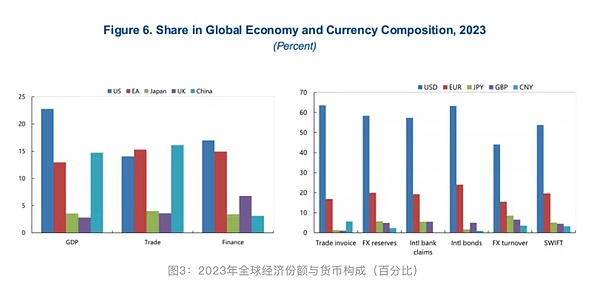
The widespread use of stablecoins may weaken a country's monetary sovereignty, especially in economies with high inflation, weak institutions, or insufficient local currency credit. Stablecoins denominated in foreign currencies have characteristics such as 24/7 operation, cross-border transferability, and low cost, which may accelerate the substitution of local currencies and weaken the transmission of monetary policy and seigniorage revenue. At the same time, by reducing cross-border transaction frictions, stablecoins may change capital flow patterns, amplify capital flows and exchange rate fluctuations in some cases, and may be used to circumvent capital flow management measures, increasing the difficulty of policy implementation. Figure 4: Relationship between Stablecoin Holding and Deposits 3. Security, Financial Integrity, and Legal Certainty Stablecoins face risks at the operational level, including technical failures, cybersecurity, governance inefficiencies, and smart contract vulnerabilities. Furthermore, the irreversibility of blockchain transactions increases the difficulty of error correction. Regarding financial integrity, insufficient regulation could lead to the use of stablecoins for money laundering, terrorist financing, sanctions evasion, and other illegal activities. Their anonymity and cross-border nature further complicate law enforcement. From a legal perspective, the legal attributes of stablecoins are still unclear. They may be classified as different asset classes under private law and financial law, leading to uncertainty regarding holder rights, bankruptcy proceedings, and cross-border claims arrangements. With the expansion of new technologies and cross-border applications, these legal uncertainties may further amplify systemic risks. The International Monetary Fund (IMF) collaborates closely with international standard-setting bodies such as the Financial Stability Board (FSB), the International Organization of Securities Commissions (IOSCO), the Basel Committee on Banking Supervision (BCBS), the Financial Action Task Force (FATF), and the Committee on Payments and Market Infrastructures (CPMI) to promote systemic policy responses to stablecoin risks. Two key documents released by the IMF in 2023 provided countries with a comprehensive policy framework covering macro-financial stability, financial regulation, and legal issues. These documents build upon the FSB's advanced regulatory recommendations on global stablecoin arrangements and integrate existing principles from multilateral standard-setting bodies. The IMF recommends that countries prioritize mitigating macro-financial risks associated with stablecoins, particularly maintaining monetary sovereignty, strengthening monetary policy frameworks, and preventing excessive capital flow volatility. The documents explicitly state that crypto-assets should not be granted fiat or official currency status, and caution should be exercised regarding the potential for stablecoins to undermine the effectiveness of capital flow management measures (CFMs). The FSB's global stablecoin regulatory recommendations emphasize strict prudential supervision of stablecoin issuers, including requirements for high-quality, highly liquid, and unburdened reserve assets, and attention to dimensions such as duration, credit risk, liquidity, and concentration. The documents note that there are currently no unified international guidelines explicitly addressing whether systemic stablecoins can be included in central bank financial safety nets. If the size of stablecoins becomes large enough to influence market operations, central banks may be forced to intervene in extreme circumstances to prevent the dumping of reserve assets and the threat to financial stability. However, providing central bank liquidity to under-regulated stablecoin issuers could also create moral hazard. The FATF has incorporated stablecoins into its Anti-Money Laundering, Counter-Terrorist Financing, and Non-Proliferation Financing (AML/CFT/CPF) standards framework, requiring relevant entities to fulfill obligations regarding customer due diligence, transaction monitoring, and suspicious transaction reporting. Stablecoins have developed rapidly in recent years. Although they still account for a small percentage of the overall size of crypto assets, they already possess both potential benefits and significant risks, involving macro-financial stability, financial integrity, legal certainty, and security and efficiency. To this end, the IMF and FSB jointly developed global policy recommendations and regulatory standards covering stablecoins, incorporating them into a broader policy framework for crypto-assets. This framework addresses macroeconomic issues such as monetary policy, fiscal policy, and capital flow management, providing systematic policy guidance for regulatory authorities in various countries. While progress has been made in implementing regulatory frameworks, global regulation remains highly fragmented. The EU's MiCA leads in comprehensiveness, while the US, Japan, and the UK have adopted different approaches, differentiating their regulations on issuers, reserve requirements, custody, and payment functions. The cross-border nature of stablecoins further complicates regulatory coordination; different practices may weaken regulatory effectiveness and induce regulatory arbitrage. Foreign currency-denominated stablecoins in cross-border environments may also trigger currency substitution and weaken monetary sovereignty. Therefore, in addition to stablecoin regulation itself, sound macroeconomic policies, a robust institutional foundation, and international coordination remain crucial for managing risks. Finally, the development of stablecoins may accelerate the adoption of distributed ledger technology in the financial system, driving changes in asset tokenization, clearing and settlement, and payment infrastructure. The IMF and BIS are actively exploring frameworks for blockchain applications in the public and private sectors and continuously monitoring the impact of stablecoins on the international monetary system. Through analysis, research, policy recommendations, capacity building, and international coordination, the IMF supports member countries in striking a balance between innovation and risk management, and promotes a more consistent and effective global regulatory environment.
Optimism gears up for Ethereum's Dencun upgrade, hinting at lower fees and network evolution, amidst fluctuating transaction dynamics.
AlexBinance.US halts services in Florida and Alaska post-CZ's legal woes; states express regulatory concerns.
 Brian
BrianOKX ceases mining services amidst strategic refocus.
 Weiliang
Trezor grapples with a phishing scam, urging user vigilance following an email system breach.
WeiliangSolana and CoinCDX's $3 million investment aims to transform India's Web3 sector by empowering developers through education, collaboration, and innovation.
 Miyuki
USDC's supply ascends post-SVB crisis, hinting at market recovery.
AlexOpenSea navigates market turbulence, strategizing through acquisitions and broadening NFT applications, despite a significant decline in trading volume and market share.
MiyukiFTX is liquidating assets and navigating legal challenges to rebuild financial stability and customer trust.
WeiliangXRP Ledger witnesses a surge in small wallets and whale activity, indicating rising interest and broader adoption, while Gemini exchange's inclusion of XRP contracts signifies growing market acceptance.
Brian