Does Bitcoin’s “sharp drop” echo “no economic demand”?
The emergence of Bitcoin is not to satisfy the "use value" in the traditional sense, but to deconstruct and reconstruct the value consensus in the global economy.
 JinseFinance

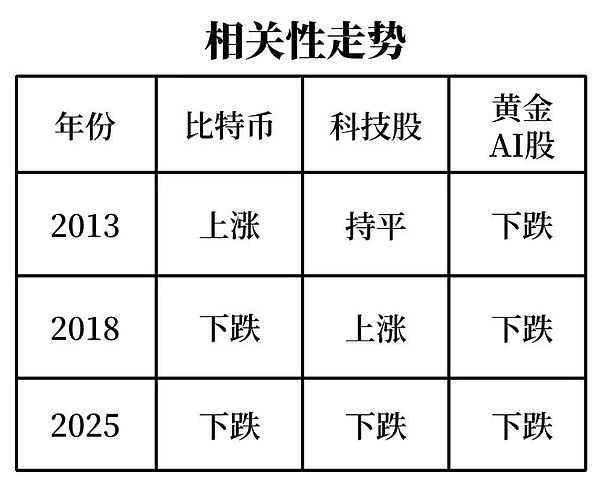
The most direct catalyst in the next three months isthe Federal Reserve's interest rate meeting on December 18th.
If a rate cut is initiated, risk assets may see a year-end recovery. However, it is crucial to pay close attention to the policy guidance for 2026; any signal of maintaining high interest rates could trigger a new round of selling.
Bitcoin needs to pay attention to three key levels: $85,000 represents institutional support (the range of major ETF inflows). A drop below $75,000 indicates a new crisis. A break above $95,000 confirms the continuation of the bull market. These price levels will be tested in the next 4-6 weeks. AI stocks face a different timeline: the Q4 earnings season will be a litmus test. Companies must demonstrate strong returns on their AI investments, with a focus on Nvidia's guidance on data center demand and the AI revenue disclosures from the FANG companies. If either falls short of expectations, it could trigger an industry-wide correction. Will Bitcoin really go to zero? The probability of Bitcoin going to zero is extremely low, but this crash foreshadows a more profound transformation. Bitcoin has evolved from a revolutionary, fringe asset into an institutionalized participant. The core issue now is no longer a survival crisis, but an identity crisis. When digital assets, which should remain uncorrelated, fluctuate in sync with the Nasdaq, how will their nature be restructured? This identity crisis is not a temporary phenomenon. Bitcoin's development path over the next decade depends on a fundamental choice: Continue to act as a macro-sensitive institutional asset? Or regain its independent attributes? Choosing the institutionalization path means that Bitcoin will be like a high-beta tech stock, driven by Federal Reserve policies and fund positions. Choosing a decentralized path requires different catalysts, including: Increased adoption of self-custody; increased adoption of Layer 2 networks; growth in on-chain stablecoin liquidity; and sustainable mining economic models. This generation of Bitcoin holders subscribes to the "digital gold" narrative, while the next generation will determine whether Bitcoin rekindles its revolutionary spirit or relegates itself to being just another asset in a diversified investment portfolio. The era of "everything skyrocketing" after 2020 has ended; now is the time for value to return to its true worth. Like life, the market often harbors profound transformations when everything seems to collapse simultaneously. Bitcoin, reborn from chaos, may exhibit a completely different form than in the past. And this may not necessarily be a bad thing.
The emergence of Bitcoin is not to satisfy the "use value" in the traditional sense, but to deconstruct and reconstruct the value consensus in the global economy.
JinseFinanceThe interest rate cut has been implemented. However, the three major US stock indexes and the crypto market have all pulled back. Why? Because the expected interest rate cut has long been predicted by the market and overdrawn in advance. This has led to a situation where the good news has been implemented but the market has turned empty. The green mountains are still there, and the sunset is red again.
JinseFinanceRecommended reading tonight: 1. FBI personally issued coins to fish for money, revealing how token issuers and market makers manipulate the market; 2. Who is Satoshi Nakamoto? We are all Satoshi Nakamoto; 3. Can the prediction market become the traffic entrance of Web3? ;
JinseFinanceBitVM2 is a bold variant: anyone can serve as a validator.
JinseFinanceThis record-breaking monthly close would mark Bitcoin’s seventh consecutive green month, the longest uninterrupted upward streak in history!
JinseFinanceWhile Bitcoin's recent surge sparks optimism, heightened withdrawals and market dynamics warrant careful observation.
 Sanya
SanyaBitcoin is now generally considered a thing, and a particularly exciting one at that.
JinseFinanceBitcoin's mining power reaches a new high, indicating increased security and miner confidence.
 Bernice
It’s obvious that bitcoin can’t free Palestine, let’s begin there. The bitcoin network just offers better money, not a miracle ...
 Bitcoinist
Salvadoran minister Alejandro Zelaya brushed off the media criticism of the nation’s investments in Bitcoin.
 Cointelegraph