DeFi data
1. Total market value of DeFi tokens: $49.187 billion
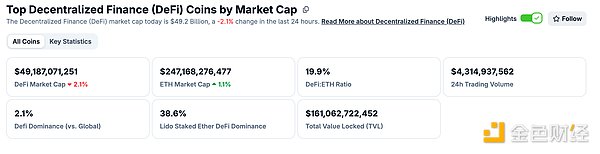
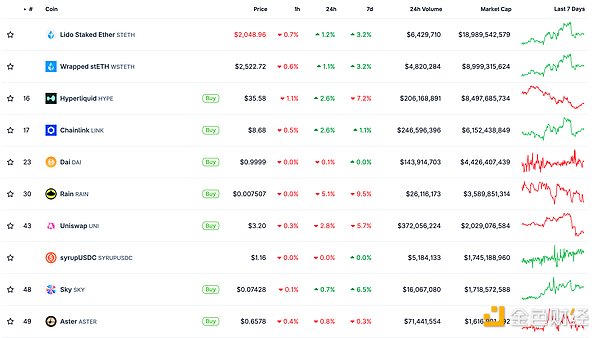
DeFi Total Market Cap Data Source: coingecko
2. Trading volume of decentralized exchanges in the past 24 hours: $43.14
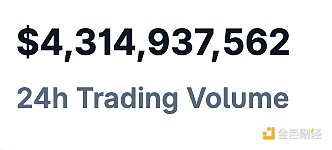
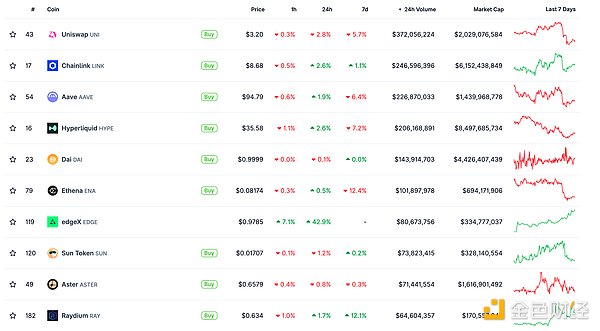
Trading volume of decentralized exchanges in the past 24 hours. Data source: coingecko
3. Assets locked in DeFi: $919.6 billion$100 million
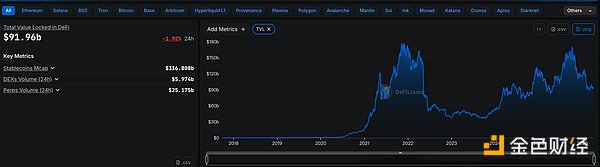
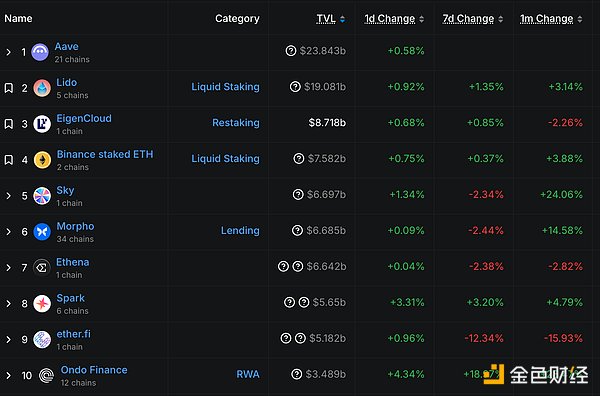
Top 10 DeFi Projects by Locked Assets and Total Value Locked. Data Source: defillama
NFT Data
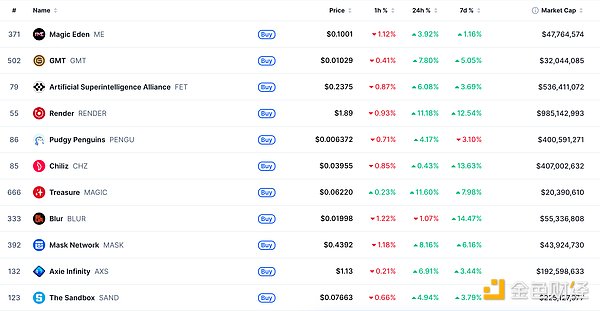
1. Total Market Value of NFTs: $7.375 billion
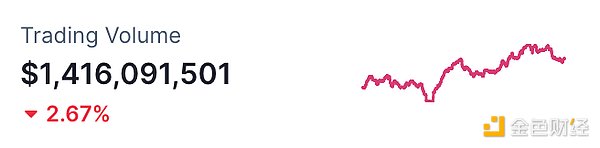
![]() 2.24 hours NFT transaction volume 1.416 billion USD
2.24 hours NFT transaction volume 1.416 billion USD
Toutiao
Drift Hack Affects 20 Protocols
On April 3rd, SolanaFloor disclosed the latest data, showing that the impact of the Drift attack continues to expand, with the number of affected protocols increasing to 20. Nine new protocols have been added: Piggy Bank, Perena, Vectis, Valeo, AmpPay, Loopscale, Prime NumbersFi, Gauntlet, and Exponent.
The estimated losses for each protocol are as follows: Prime Numbers Fi estimated losses exceeding $10 million, Gauntlet approximately $6.4 million, Neutral Trade approximately $3.67 million, Elemental DeFi approximately $2.9 million, Reflect Money approximately $1.95 million, Vectis approximately $1.69 million, Ranger Finance approximately $919,000, Pyra approximately $551,000, and PiggyBank confirmed a loss of $106,000, which was fully reimbursed by the team.
AI Hot Topics
1. GoPlus SafuSkill Launches Launchpad, Promoting the Assetization of AI Skills
On April 3, GoPlus announced the official launch of the Launchpad feature for SafuSkill, building the infrastructure for the issuance and revenue generation of AI skills.
This feature integrates an AI Skill marketplace, a token launcher, and a developer revenue system, supporting developers in issuing Skill tokens and automatically connecting to PancakeSwap liquidity to form an on-chain revenue model based on transaction fees. Developers can withdraw accumulated revenue at any time.
Technically, SafuSkill Launchpad combines AgentGuard security scanning, GitHub developer verification, and the Flap Protocol bonding curve mechanism to provide security and price discovery capabilities. SafuSkill aims to drive the transformation of AI Skills from tools to assets, build AgentFi infrastructure, and promote the development of the Skill Economy.
2. Google Releases Multimodal Model Gemma 4
On April 3, Google released the multimodal model Gemma 4. Gemma 4 can process text and image input (smaller models support audio input) and generate text output. This version includes an open-weight model with pre-trained and instruction-tuned features. Gemma 4's context window can hold up to 256,000 tokens and supports more than 140 languages.
3. AI Data Company Mercor Confirms Major Data Breach Affecting Clients such as OpenAI and Anthropic
On April 3, according to Fortune, Mercor, a startup providing training data to AI companies such as OpenAI, Anthropic, and Meta, confirmed a major security vulnerability. This incident stemmed from a supply chain attack targeting the open-source library LiteLLM, which is widely used by developers to connect AI services and has millions of downloads daily.
The attack was launched by the hacker group TeamPCP, who stole credentials by implanting malicious code in LiteLLM.
DeFi Hot Topics
1. Hyperliquid Plans to Lower Portfolio Margin Threshold
On April 3, Hyperliquid announced that after the next network upgrade, users with trading account assets exceeding $10,000 will be able to enable Portfolio Margin without any trading volume requirements. New users can immediately use this mode after depositing funds. Meanwhile, accounts with a weighted trading volume of $5 million or more will still be able to enable Portfolio Margin, and this rule remains unchanged.
2. Clanker Launches Ecosystem Fund to Distribute Protocol Fees to Creators and Community
On April 3, Clanker tweeted that it will launch the Clanker Ecosystem Fund (CEF).
CEF's mission is to allocate protocol fees to creators and communities who make positive contributions to the Clanker and Farcaster ecosystems. In the coming weeks, protocol fees will be redirected back to the ecosystem and used to support Clanker infrastructure development. More details (including fund managers, allocation mechanisms, and participation methods) will be announced soon.
3. DefiLlama: Hackers Stole $169 Million from 34 DeFi Protocols in Q1
On April 3rd, DefiLlama data showed that in the first quarter of 2026, cryptocurrency hackers stole over $168.6 million in cryptocurrency from 34 decentralized finance (DeFi) protocols, a significant decrease compared to the same period last year.
Data shows that the $40 million private key breach at StepFinance in January was the biggest security breach of the quarter, followed by a smart contract manipulation incident that resulted in the theft of $26.4 million worth of Ether.


 Weatherly