False Alarm: Cointelegraph's Blunder About iShares Bitcoin Spot ETF Pumped Bitcoin Price to 30K
Cointelegraph tweeted that SEC approved iShares' Bitcoin (BTC) Spot ETF, but was confirmed to be false by BlackRock.
 Aaron
Aaron

Huang Renxun, one of the most present tech figures of our time. Every year at GTC
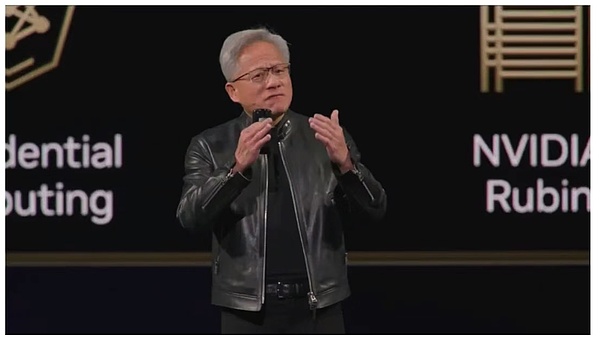
Seventeen years later,2026Year3Month, Huang Renxun stood in San JoseSAP CenterOn the stage. NVIDIA released a new product, but he barely mentioned chip specifications or Groq LPU integration. Instead, he presented a graph: the Y-axis represents throughput, the X-axis represents user-perceived speed, and the graph shows five pricing tiers, from free to $150. $1 million / $1 million coin. Addressing the CEO and decision-makers in the audience, he broke down the data center's computing power allocation, explaining which model was suitable for which scenario and how much each scenario was worth. He didn't sell GPUs, but rather the reason for their existence; not a statement of the status quo, but a declaration of the rules. "Tokens are new commodities, and like all commodities, once they reach an inflection point and mature, they will be divided into different parts." They share the same mindset: they never consider what to create, but rather the logic of how the world operates. Products are merely byproducts of the rules, not the end goal itself. They are extremely confident and focused because the rule-makers don't persuade others; they simply wait for the world to catch up. II. Choosing to Continue When No One Believes Rules are not easily accepted from the outset; they often face a long period of neglect before they truly take effect. Satoshi Nakamoto did not choose a calm time to release the white paper; instead, he chose a rather delicate moment. In 2008, Lehman Brothers went bankrupt, and the global financial system teetered on the brink of collapse. In October of that year, he chose to release the white paper, and the Bitcoin genesis block—1/3/2009—was mined. The block data contained the text: "The Times 2009 1/3/2009". March 3rd Headline: Chancellor of the Exchequer Faces the Brink of a Second Bank Bailout. No comments were written, no declarations were attached, only this line of text was embedded in code and permanently written to the blockchain. This was his only political statement, not an angry outcry, but an extremely restrained irony from someone who had lost faith in the old system. For a long time, GPUs were merely graphics cards for gamers. After its launch, CUDA faced a shortage of developers, the market didn't understand it, and very few developers were willing to learn it. AI research was repeatedly declared a dead end in the industry; investors didn't understand it, Wall Street didn't buy it, and NVIDIA was on the verge of bankruptcy several times in its early stages. In a later interview, Huang Renxun said that during that period, he lived in constant fear that the company would die the next day, even turning this state into a management philosophy: "The company is always 30 days away from bankruptcy." This wasn't pessimism; it was his way of driving himself and the entire team by replacing complacency with a constant sense of crisis. In this situation, most people would choose to shrink, adjust their direction, or even give up, but Satoshi Nakamoto continued writing code, fixing bugs, answering technical questions in forums, never talking about himself, never explaining his motivations; Jensen Huang continued to bet on parallel computing, standing at GTC year after year, telling stories of a future most people haven't yet seen. Their answer wasn't language, it was time. This kind of "no explanation needed" isn't arrogance, but rather an almost obsessive trust in the inherent laws: as long as the rules are right, the world will eventually gravitate towards them. Thirdly, they all understand how to design scarcity. When the rules begin to operate, what truly empowers them is scarcity. Satoshi Nakamoto never provided a detailed explanation for the number 21 million, but this design decision is the value anchor of the entire Bitcoin system. He understood the logic of currency better than anyone: something with an unlimited supply has no value. He hardcoded scarcity into the code; no matter how many mining machines flood in, no matter how many times the computing power increases, the total supply of Bitcoin will never exceed 21 million. This number is not an attribute of Bitcoin, but a prerequisite for the existence of Bitcoin's value. Huang Renxun chose a different kind of scarcity. At GTC, he said, "You still have to build a 1GW data center. That 1GW factory, amortized over 15 years, is about $400 billion. Even if you don't put anything in it, it's still $400 billion." "One billion. You must ensure that the best computing systems are used on it." A 1GW data center will never become a 2GW data center. Land is limited, power grids are limited, heat dissipation is limited—this isn't a code constraint, it's a physical law. Huang Renxun understands better than anyone that under the constraint of physical scarcity, every watt of wasted computing power means a real loss. Both of their attitudes towards scarcity are anchoring, not possession. Because of scarcity, tokens have price; because of price, rules have weight; because rules have weight, the system is trustworthy.
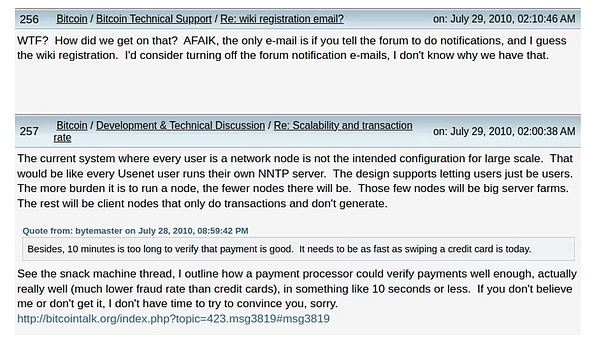
Satoshi Nakamoto designed the rules, handed over the code, and left gracefully.
After designing the rules, Satoshi Nakamoto handed over the code and left gracefully. The last email contained only one sentence: "I've moved on to other things." After that, there was no further communication. His approximately 1.1 million Bitcoins remained untouched; he accomplished decentralization itself through his disappearance. Huang Renxun designed the rules, stayed on to continuously iterate, and deepened the moat. Thirty years, five paradigm shifts, yet he never left the stage. Two people with completely opposite paths believe the same thing: rules are more reliable than people, and systems outlive individuals. Their deepest similarity lies not in what they did, but in how they perceive themselves and what they create. Seventeen years ago, we saw because we believed; seventeen years later, we see without believing. It is the next after Watt, Ampère, and Bit. And the writers of the rules only need to write at the starting point, and the whole world operates according to their logic.
Cointelegraph tweeted that SEC approved iShares' Bitcoin (BTC) Spot ETF, but was confirmed to be false by BlackRock.
AaronSui under the investigative lens of the FSS with allegations centred on inaccurate reports pertaining to its circulating supply and the purported gains derived from staking activities.
 Catherine
EtherHiding is a new technique employed by hackers to infiltrate websites powered by WordPress. Once in, they embed malicious code designed to pilfer partial payments from blockchain contracts.
 Kikyo
KikyoFollowing the initial report on Monday, BC Technology's Share Price fell by 22 per cent.
 Clement
In a startling development during the ongoing criminal trial of FTX founder Sam Bankman-Fried, a comprehensive list of donations totaling $230 million has been exposed. This extensive revelation encompasses a wide array of recipients, including friends, family, politicians, political action committees (PACs), and special interest groups.
 Jasper
All prosecutors, regardless of their specific task force, receive basic training related to technology-related crimes and digital evidence. Task force-specific prosecutors are available to provide specialised expertise as required.
 Davin
DavinReddit has announced the discontinuation of its blockchain-based rewards initiative, Community Points. The decision, outlined by Tim Rathschmidt, Reddit's director of consumer and product communications, comes as a response to the escalating challenges in scaling the program, exacerbated by evolving regulatory conditions.
JasperBaidu's innovative stride towards global AI competence and advancement, paving the way for China's technological aspirations.
 Hui Xin
Binance had previously suspended dollar deposits in June, following pressure from the SEC.
ClementReddit to phase out Community Points — The blockchain-based program that was designed to reward creators and developers on the platform.
Aaron