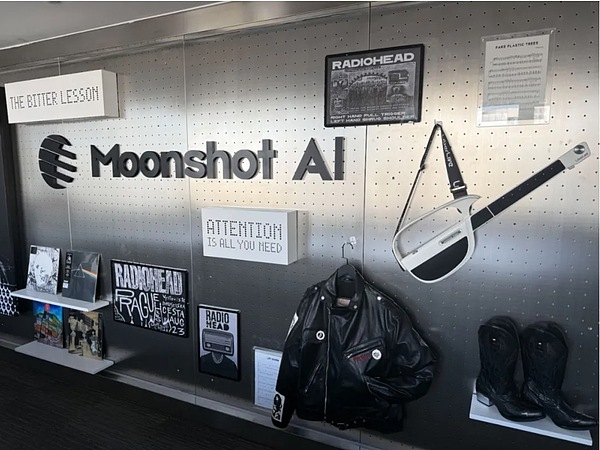
If you want to complete any task at the company that requires assistance from others, it's very simple: just ask. No need for leadership, no need for any approvals, no need for coordination meetings, and no need to break down any "departmental walls." Kimi has no departmental walls, not even departments.
Yang Zhilin's personal motto is only four words: Direct Communication.
Yang Zhilin's personal motto is only four words: Direct Communication.
Author: Liu Mo, Source: WeChat Official Account "People"
The spring of 2026 favored Kimi. From breaking records in revenue, financing, and valuation, to a paper with a 17-year-old high school intern as the first author being highly praised by Silicon Valley giants like Musk, and then being "shelled" by the US company Cursor with a valuation of $50 billion, Kimi almost simultaneously completed a beautiful triple symphony of capital, technology, and business. This startup, founded only three years ago and valued at over 120 billion RMB, is gradually emerging in the global AI narrative.
But the dark side of the moon remains mysterious.
I was allowed to observe deeply at the company headquarters for 100 hours.
As an independent author, I can interview any employee willing to speak, sit in on any meeting that doesn't involve trade secrets, and my writing is uninterrupted and unpaid—that's truly the company's style. Standing inside the company is like being in the eye of a storm. Within the eye of the storm, everything is still. Workstations are quiet, the sound of keyboards is sparse, and occasionally laughter can be heard. The hustle and bustle of the outside world—the rumors, arguments, praise, and imitations—finds no echo here. Over 300 people, with an average age of under 30, each carrying a valuation of nearly 400 million. 80% of the colleagues here are introverted—people sit side-by-side, but are more accustomed to typing than talking. Here, introversion is not a flaw, but an organizational agreement. I remember my first visit to this company in 2024, on that night when the storm began to brew, and my first impression of the dark side of the moon wasn't very good.
“DeepSeek saved us”
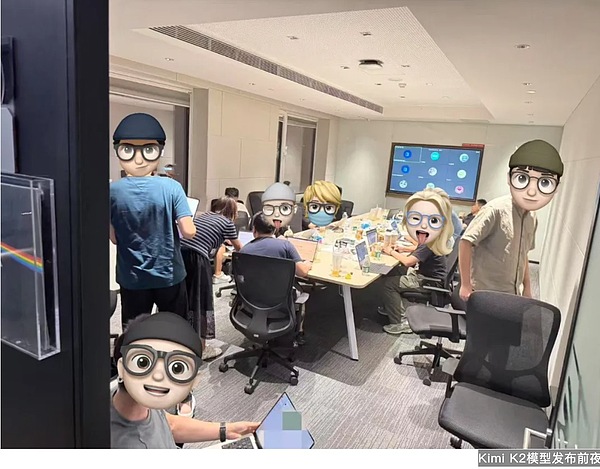
The night of December 24, 2024, was a Christmas Eve that most Chinese people would hardly notice, but it was Julian's darkest moment, one she would never forget. She was 26 years old, had just graduated from Peking University two years prior, had no industry experience, and was already one of Kimi's earliest employees. This young yet experienced woman sat at the long table in the Radiohead conference room, facing more than thirty colleagues, tears streaming down her face. She consistently failed to deliver a holiday marketing plan that met the co-founder's standards. With only a month until the Spring Festival, continuing to upgrade, or even completely overturning the latest plan that had already been revised six times, while ensuring collaborative implementation by the R&D team, was inherently a low-probability event. However, the company had huge expectations for growth during the 2025 Spring Festival: it was during last year's Spring Festival that Kimi went viral with his "2 million-word long text," resulting in a surge in C-end users and even spawning "Kimi concept stocks" in the capital market. That weekly meeting was long and agonizing: twenty inexperienced young colleagues like Julian took turns reporting, covering everything from social media campaigns to user operations, from domestic public relations to overseas marketing—everything was discussed collectively, with decisions made by the co-founder. Kimi, like a bewildered teenager in adolescence, even with a monthly budget of tens of millions, couldn't help but feel overwhelmed by the aggressive competition. Finally, the meeting ended precisely before 4 a.m. No one knows if Julian's later plan was successful. Because a month later, when the world first learned the name DeepSeek, everything else became irrelevant. Hayley from the growth team returned to her hometown of Wenzhou, where relatives and friends kept asking: "Do you know DeepSeek?" It was as if Kimi was a name from the last century. Hayley had the most difficult year of her life. She said the silence throughout the company was deafening. The annual meeting was usually held in March after the Spring Festival, allowing all employees to challenge the boss. That year, almost all the questions revolved around DeepSeek. The most pointed questions came from the HR team, who, with absolute sincerity, broke through the barrier: How should we answer the candidate's question—"DeepSeek also gave me an offer, why should I come to Kimi?" But not everyone thought that way. Alex from the algorithm team recalls that if he felt any strong emotion at DeepSeek, it was only one: excitement. This excitement wasn't just his own; it was the mindset of the entire algorithm team. They saw another possibility: a lower-cost strategy, an open-source approach, and a fact that no one had believed before—that as long as the technology was advanced enough and the model was robust enough, an unknown Chinese startup could also gain worldwide respect. The product team wasn't anxious either. Kevin, one of the earliest product colleagues, had clear and unwavering confidence: DeepSeek gained its initial popularity through its model, but once Kimi's modeling capabilities caught up, they would be able to do much more to enhance the product. No one knows what kind of discussions the co-founders went through. But the company swiftly completed its strategic adjustment and refocusing, achieving a true consensus among all employees. If you ask any colleague what the most important thing in the company is, they will tell you without hesitation: the model. From then on, you could feel the growing respect for DeepSeek within the company. This was partly based on mutual appreciation from a peer's perspective, and partly, as Alex said, "Actually, DeepSeek saved us." [Image of DeepSeek shoes] After Ezra asked this question in surprise, I was even more surprised than her. On her office floor, almost everyone keeps a pair of slippers under their desk, because comfortable clothing makes people more relaxed, focused, and creative. This is the dress code for smart people. I've met many high-achieving students, but the "good students" here are extremely different. When Ezra was in elementary school, she tried to hack into her family's computer simply because her parents wouldn't tell her the password. In middle school, she became interested in Bitcoin, which at the time cost only 300 yuan per coin. She persuaded her mother to give her some pocket money for investment, but her mother told her it was a scam. In high school, the first time she took a taxi, she drew a model of a ride-hailing service. Unfortunately, there were no AI tools available then, otherwise it might have been launched much earlier. In college, finally having her own pocket money, she chose to enter the stock market, losing 90% of her investment in the A-share market. This stock market Waterloo made her deeply reflect on the limitations of humanity, thus unlocking her interest in AI. Her understanding of AGI (Artificial General Intelligence) was simple: to create N Einsteins to solve all of humanity's problems. From then on, she was determined to find a company to explore the limits of AGI, even though she had already recouped her investment in the A-share market. Due to her solid academic background, she received offers from various companies. She chose to join Kimi simply because, during the interview, she was impressed by founder Yang Zhilin's profound understanding of technology and meticulous attention to detail. She believed that Yang Zhilin was someone who truly cared about models. He lacked the impetuousness of intelligent people and the utilitarianism of businessmen; until the end of the interview, she didn't even know he was the company's founder. Karen was rebellious from a young age, arguing with teachers and never listening to her parents. She insisted on studying abroad, and after graduating, she insisted on starting her own business. The stable and comfortable life at a large company left her disillusioned. She didn't want a life where she could see the end from the beginning. I asked him, "If you had to choose between 100% (60 points) and 1% (100 points), which would you choose?" He chose the latter without hesitation. It wasn't that he couldn't stand 60 points, he just hated 100%. This kind of entrepreneurial spirit forms a certain underlying characteristic of the group. According to incomplete statistics, at least 50 people in the Dark Side of the Moon have founded or joined startups. Clearly, Kimi likes to hire CEOs. More accurately, this place is sheltering wave after wave of wandering geniuses. Geniuses aren't necessarily top students or high achievers; what's important is that, in a certain dimension, they possess eyes that can see through time. In a company where 80% of employees hold degrees from "985" and "211" universities, Yannis's resume isn't particularly impressive. However, as early as 2023, he foresaw the rise of DeepSeek and Kimi within the engineering community—an era when model companies didn't yet have products. This foresight was discovered by a colleague born in the 2000s, who introduced him to the company. Karen says that too many intelligent people are trapped in the constraints of the system. From family to school to the workplace, they unconsciously obey the collective, unable to see their own true needs. Only a small minority try to escape, and often remain unseen by the world. One of Kimi's missions is to see them. Without this vision, a 17-year-old high school student wouldn't have been able to collaborate with the team as a Kimi intern and publish a paper that Musk praised. The person who placed him as the first author was none other than Bob, the "mentor" who found him. The line between genius and madness is thin. When an misunderstood madman arrives on the dark side of the moon, he might suddenly become a world-changing genius; or perhaps it's where unseen geniuses can truly blossom. Bob told me that, to some extent, a large ego isn't a problem, it might even be a good thing. True geniuses are those who use ego as intrinsic motivation, convinced they must participate in a great cause—the kind of geniuses they absolutely don't want to miss. Genius is obsessive. In this team, training top-tier AI models is called "alchemy," and alchemy is essentially about constantly fixing bugs. After launching the Flagship Run, Bob and his colleagues developed an unbreakable habit: the first thing they did every morning was refresh hundreds of thousands of internal monitoring metrics. Any abnormal rise in any curve on the screen would raise an alarm: was there a problem with optimization? Was there a flaw in the architecture design? Or was the numerical precision misaligned? They are as perceptive as trained animals. Some even sift through the training corpus to identify tokens with excessively high gradient values, printing them out one by one and questioning them word by word: Why are you beating so violently? Everyone who has truly participated in this "birth" has experienced these sleepless nights of intense tension. They are not driven by anxiety, but by curiosity. This obsessive vigilance has propelled the model to the top of the industry. A cluster of geniuses. In the past year, Kimi has recruited over 100 people through internal referrals, either friends or friends of friends. This recruitment model is internally known as "person-to-person." Based on this deeply connected network of relationships, trust becomes a natural organizational asset. Essentially, Kimi has shifted the difficulty of organizational management to talent recruitment. The people attracted through referrals are "like-minded," echoing a key word almost everyone emphasizes: TASTE. One evening in September 2025, a few engineers casually launched a small internal project named "Ensoul" (meaning "to give soul"). The name itself is like a line of poetry—they wanted to bring dormant code files to life, transforming them into a conversational intelligent assistant in the command line. This sensitivity to names is not accidental. They once had a framework called "YAMAHA," an abbreviation of "Yet Another Moonshot Agent"; and the core underlying layer was named "Kosong"—meaning "emptiness" in Malay, derived from the Zen concept of "emptiness is form," implying that it is like a blank sheet of paper, without any pre-set functions, yet containing all possibilities. It is this very taste that determines the product's appearance. While others were cramming chat windows into command lines, they thought it was ugly: real programmers open terminals to input commands, not to chat. So Kimi CLI was designed to be more like a "smart shell"—it understands your input but doesn't force itself into a chat window. This minimalism is also reflected in the code. The entire core logic is only 400 lines of Python, like a short poem, stripped of all unnecessary embellishments. Modules are cleanly decoupled, allowing users to not only customize features but also disassemble Kimi into its components and assemble their own applications. Even the early Kimi Agent was initially called "OK Computer"—although the latter was eventually forced to change due to its high barrier to entry. But the namer seems to disregard the internet's rules of maximizing traffic, only obeying personal musical tastes and a fastidious approach to language. Some jokingly say that if you were to rank the percentage of people who can play musical instruments among AI companies, Kimi might be number one. Taste has become the highest and most difficult hiring standard to achieve. It cannot be quantified, yet it is ubiquitous. Generalization, then evolution. You may never truly understand what everyone at Kimi is doing. The company likes to use the word "team" to describe the division of labor. Overall, the directions—algorithms, R&D, growth, strategy, and functions—are roughly clear. However, when it comes to the so-called "departments" or even specific divisions of labor, no one can explain it clearly—because you're dealing with an organization without departments, job levels, titles, OKRs (Objectives and Key Results), or KPIs (Key Performance Indicators). Even all reporting lines are unrealistically simplistic. This is utterly incomprehensible to Brandon, a Tsinghua University graduate with bachelor's and master's degrees, who has held management positions at Silicon Valley giants and major Chinese companies, and built a billion-dollar startup. He has been immersed in the industry for many years, specializing in technical management and having led teams of nearly a thousand people. He wanted to continue his experience in the AI field and make a name for himself, but co-founder Zhang Yutong told him that the company doesn't operate that way, because the team size he can lead is only about two people. Driven by some kind of intuition about the future, he wanted to discuss it further. So, in January 2025, on a long night filled with doubt and turmoil, Brandon met his Tsinghua University junior, founder Yang Zhilin. The former couldn't have known then that the latter's name would be mentioned so frequently in the media today, alongside Musk and Huang Renxun. The only thing he remembered was the first thing his junior said after the initial greeting: "Senior, RL (Reinforcement Learning) is the future." Afterward, the conversation seemed more like Yang Zhilin's murmurs—he was so deeply immersed in his own thoughts that Brandon couldn't understand most of the Chinese. But he couldn't deny that he realized for the first time that the knowledge structure and mindset he had built over the past twenty years were crumbling on the eve of a revolution, along with all his ego. As for the reason he ultimately decided to join the company, he told me, somewhat mysteriously: Yang Zhilin could become a great prophet because he is visionary enough and pure enough. Later, when this company, which didn't value titles, hesitated because it was difficult to assign him a specific role, his firm response wasn't a joke: "Even if I have to clean toilets, I'll do it. And I'll do it the best I can." Not all managers and experts from large companies thrive here. Phoebe, a Gen Z girl who transitioned from the growth team to the product development team, described herself as a "naive young girl who knows nothing." She earnestly told me that in this company, rich experience and a strong resume could become a burden—the AI industry is too new and changes too fast; a senior expert might not learn and grow as quickly as she, a "naive young girl." She saw at least three mid-to-senior level managers from large companies fail their onboarding. One eventually decided to leave for another industry, feeling that the people around him were extremely young and intelligent, and after being repeatedly crushed, he completely broke down—this wasn't his era or his industry, so he might as well accept his fate and give up. Since the DeepSeek incident, Phoebe also felt a deep sense of crisis and decided to completely abandon research and deployment, wanting to instead help the company in product and R&D. She began an endless cycle of intensive knowledge acquisition, even going live on Bilibili to learn, spending hundreds of hours on it. But to her surprise, the company readily offered her a transfer opportunity from the start. In fact, among the thirty colleagues interviewed, more than half had experienced multiple changes in their job responsibilities. Compared to their previous jobs, this change rate is probably as high as 80%—meaning that almost everyone at Kimi is doing something completely different from before. Kimi prefers people with generalization ability. In the context of AI, generalization ability refers to the model's ability to remain effective in new scenarios beyond the training data—it's not about rote memorization of answers, but about capturing underlying patterns and structures. Meanwhile, the mid-to-senior level employees of large companies have been trained for too long within the specific KPI systems, reporting scripts, and resource game rules of these giants. Their algorithms have become overfitted to local optima. When environmental variables change drastically, their abilities may fail in the process of adapting to the new distribution. If traditional large company employees are like specialized models, then the individuals pursued by Dark Side of the Moon are like basic models: after mastering the basic rules through SFT (Supervised Fine-tuning), they use RL (Reinforcement Learning) to play against themselves in multiple tasks, ultimately gaining the ability to transfer knowledge across domains. James, a 26-year-old international student who returned from Silicon Valley, dreams of "giving money to young people." A devout and fervent believer in artificial intelligence, he believes his physical body is merely a sensor for agents to collect information. While playing League of Legends with friends, he simultaneously records and collects his heart rate, pulse, and other physiological data to analyze which teammates' words affected his emotional state and performance. His views are sharp to the point of being extreme: "Anyone over the age of 14 who tries to learn a completely new language cannot become fluent enough to speak it like a native speaker. The same applies to AI." Dan, who had just graduated from school and joined the company, experienced "knowledge anxiety" for the first time. In school, he had only ever played with "toy-level" models—small models with 7B parameters, which could be completed in a few days using 32 graphics cards. Now, he had to manage the MoE architecture behemoth with hundreds of billions of parameters and face a data ocean of trillions of tokens. This was equivalent to jumping directly from a small pond into the Pacific Ocean. To tackle this tough challenge, he started a self-torture-like learning mode, completely disrupting his sleep schedule. He worked during the day in Beijing time at the pace of Silicon Valley's late nights, and vice versa, staring at the training monitoring screen for hundreds of hours at a time, like a stock trader watching the market without daring to blink. The real challenge wasn't the workload, but the fact that he had to juggle three roles: algorithm architect, designing optimal solutions in the intricate maze of models; systems engineer, troubleshooting in the quagmire of distributed computing, like repairing a global pipeline system; and data curator, "refining" from massive amounts of data, achieving top-tier performance on benchmarks while ensuring a smooth and engaging user experience. Midway through training, a sudden "internal surgery" was needed: key parameters, stored in half-precision (bf16), experienced abnormally high values, threatening to spiral out of control. The team acted decisively, switching to full-precision (fp32) halfway through training to stabilize the situation—like changing running shoes halfway through a marathon. Dan said that simply writing algorithms, building systems, or cleaning data—a single-point expert—can't create top-tier models. There's no excuse for "I only handle this part." Here, you're required to integrate three completely different worlds: algorithms, engineering, and data—essentially working multiple jobs simultaneously. This cross-dimensional training allows you to achieve in a very short time what others might take years to accomplish. Therefore, the test is brutal for anyone trying to join Kimi. Although there are no OKRs or KPIs, no office politics or managerial manipulation, not even clocking in or out, if you're not 'AI Native,' if you can't 'generalize,' if you can't 'research,' then you won't find your purpose.
“There’s no 'Deng's flavor' here.”
Most brands want to have a story. But every Kimi colleague kindly reminds me:
Don’t write about Pink Floyd in articles, or that piano placed at the company entrance.
They feel that those who understand already understand, and those who don’t don’t need to understand. From the Dark Side of the Moon to Kimi, the origin of the name has nothing to do with technology or AI.
But if a company overemphasizes its connection to rock art, it inevitably becomes pretentious. People enjoy beauty without even realizing it. Win is a Gen Z exodus from a large company. He told me it's strange here; you can get work done without meetings. In his previous company, daytime was spent in meetings, and work could only be done at night. He realized a simple truth: if the main energy is spent coordinating production relations, then there's little room for improving productivity. This is a characteristic of some AI-native organizations. More than ten employees explicitly stated that they increasingly dislike interacting with real people and are more accustomed to communicating and collaborating with AI because AI is more reliable and simpler. This is also related to the company's overall introverted nature. Someone used a more endearing word: shy. Everyone can be a social butterfly in group chats, but is taciturn in real life. Kimi doesn't have many cultural activities; besides the annual meeting, the most recent one was organizing massages for everyone in the office. Introversion doesn't mean refusing to communicate or lacking energy. Although giving interviews isn't anyone's task or obligation, I never received a single "NO" response. In the group chat, a massive amount of information flows rapidly every day, along with various abstract emojis. No one's speech was met with silence. If you want to complete any task at the company that requires assistance, it's very simple: just ask. No need for leadership, no need for any approvals, no need for coordination meetings, and no need to break down any "departmental walls." Kimi has no departmental walls, not even departments. Yang Zhilin's personal motto is only four words: Direct Communication. But everyone admits that the company has been changing since its inception. Some changes are proactive, some are reactive, and some even feel like a slap in the face. From massive user acquisition to focused model development, from adhering to closed-source principles to rapid open-source adoption, from Chatbots to Kimi Agent, Kimi Code, and Kimi Claw, from consumer-facing (C-end) to business-facing (B-end) and back to C-end… not all changes can withstand scrutiny. In Ezra's mind, one main principle remains constant: respect for facts. She knows that all changes have only one reason and one purpose: to make the company's development more in line with the requirements of objective laws. The company allows everyone to have their own "ego," but doesn't like recruiting people who put themselves above facts. From the co-founders to every colleague, everyone is easily persuaded. As long as the facts are clear enough, people are willing to acknowledge their limitations, and so is the entire organization. Ezra says that it is precisely based on the ultimate pursuit of truth, reality, and justice that people dare to speak the truth. Because truly intelligent people's self-esteem is not hurt by the truth. Another essential condition for extreme candor is the absence of a competitive system, zero-sum games, and conflicts of interest. Every member is willing to share their research findings and technical details free of charge. Just as the company had its own community in its early days, it still promotes a community culture today. The sharing of information and knowledge accelerates everyone's collective learning and progress, ultimately benefiting everyone. Win says that a toxic culture is contagious. So is a good culture. Some use the word "unity"—a rare word not used to describe a company for a long time—to describe this state. In fact, Kimi has always faced a harsh environment: external competition from giants, internal pressure from large companies, and limited computing resources. But these unfavorable factors are actually strengthening the company's cohesion. Ultimately, people are the only truly important asset of an organization. Recently, Florence was poached by a competitor with twice the annual salary. She refused without hesitation, and the reason for staying was simple: "There's no Dengwei here."

"I don't know how she got through it."
At the beginning of the interview, when I was about to face one of the smartest and most AI-savvy people in the world, I was incredibly nervous: as a liberal arts student, I had never worked in the tech industry, and my understanding of AI was extremely limited.
But when I actually communicated with the young experts on the algorithm and product development teams, I found they were the ones who were more nervous: they were afraid I would be embarrassed because I didn't understand their technical terms. So everyone carefully translated the English into Chinese first, and then into Chinese that I could understand. This kind of protection was touching. I remembered the company's only instruction before the interview: protect everyone. Therefore, I tried to avoid questions that were too sensitive or might offend others. Even so, Ty still showed a subtle emotional fluctuation when he called me. When he first joined Landing, he encountered great difficulties and even felt he couldn't persevere, considering leaving. Until one weekly meeting, he saw Annie, a girl who had only graduated two years prior, finally pushing a project to a substantial level after countless setbacks and internal doubts. He felt he couldn't give up either. After all, he was much older and more experienced than her, yet his mental fortitude was far inferior. He sighed, "I don't know how she got through it." In fact, he wasn't the only one who considered quitting. Annie had also thought about leaving. For a considerable period, she was responsible for building a section overseas from scratch, but without making any breakthroughs. To make matters worse, well-meaning colleagues from other teams directly advised her to "give up this meaningless effort." She said she had shed more tears in her life for Kimi—never for any other company or any ex-boyfriend. She wasn't lacking in opportunities; she had even received another offer with better pay. But she just couldn't convince herself to work her astray for someone else. She wanted to talk to Zhang Yutong again. After the conversation, she decided to stay. She didn't tell me what they talked about, only saying: "Yutong is the strongest, fastest-iterating, and highest-ceiling boss I've ever met. Following her, I can reach even greater heights." Finally, she added, "I don't know how she managed to get through it all." When you've gathered enough information, you'll find that repeated phrases appear frequently. And those most frequently repeated phrases are precisely what easily outline the commonalities of the team. Bob was pulled back to China by Yang Zhilin to start a business, giving up the opportunity to pursue a PhD in the US. He joined the company from day one, representing those who know it best. When asked the question everyone gets asked—what do you think is the most important quality of a team—he thought for about two minutes and answered with two words: resilience. For a company only three years old, any emphasis on resilience is a luxury, but it's not a lack of sincerity. He believes that intelligence and courage are sometimes antonyms, because the smarter a person is, the easier it is for them to see risks, and therefore the easier it is for them to give up. Foolish persistence is unlikely to succeed—so only those who see the truth and calculate the probability of failure and continue forward deserve to be called resilient. A story circulated within the company about his "three falls into the Cliff of Repentance." In May 2023, Freddie and his colleagues received a seemingly impossible task: to enable AI to read 128K of text at once (equivalent to hundreds of pages of a book), while the industry standard at the time could only handle 4K. He quickly designed MoBA v0.5, but due to the need to rewrite the underlying training framework and the fact that the main model was already half-trained, the cost was too high, and the plan was forced to be shelved—this was his first time entering the "Cliff of Repentance." Six months later, he returned with version 1, adopting a solution that allowed for continued training on existing models. The small model was successful, but the large model encountered a loss spike (a sudden increase in training loss), failing regardless of adjustments. The project retreated for the second time, a period of six months, even missing the company's milestone of releasing 200,000 words. However, the team didn't disband; the company launched a "saturation rescue"—mobilizing top technical experts to collectively tackle the problem, rewriting the underlying logic, and finally enabling version 2 to stably pass the "needle in a haystack" test. Just as it was about to launch, a third blow struck: in the SFT stage, the long text summarization task performed poorly due to overly sparse training signals. By this time, the project had already invested heavily, but the engineers once again retreated to find a solution, ultimately resolving the issue by adjusting the last few layers of attention mechanisms. Three retreats, three returns. At the end of the interview, I posed the ultimate question to Freddie: How would you describe this company? He only said two words: "Moon landing." Why "moon landing"? He quoted that famous speech: "We choose to go to the moon in this decade and do the other things, not because they are easy, but because they are hard." I ultimately didn't bother or try to spy on any of the co-founders. Externally, they remain reclusive, disliking interviews and showing no interest in fame; internally, however, they are virtually omnipresent. In such an extremely flat organizational structure, a super-brain is essential for support; otherwise, vitality will turn into chaos. With no middle management, each co-founder must connect with 40 to 50 colleagues, deeply involved in both technology and business operations, ensuring a high degree of consistency between company decisions and execution. Although all five co-founders are from Tsinghua University, the energy bandwidth and management radius of Carbon-Based Biotechnology have their limits. When the company reaches a valuation of 120 billion and expands to a team of over 300 people, the super-brains will also be overloaded. The overload isn't limited to the co-founders. This is an infinite game driven by self-motivation: each team member must support a valuation of 400 million per person, meaning creating value far exceeding the productivity of many companies. The revolutionary variable lies in the tools. Kimi's working hours are not exaggerated; employees are allowed to sleep in until they naturally wake up each day and don't have to work overtime until the early hours of the morning. Leo from the product team says he has a massive team under him. Imagine the following scenario: At 10 a.m., Leo wakes up and walks into the office. His task is to organize user feedback from five global markets over the past 24 hours and determine the iteration priorities for this week—something that used to take three people two days to complete. Leo launches three agents. The strategy agent filters out high-priority requirements related to "long text interruptions" from 3,000 feedback items; the translation agent analyzes Japanese dialects and Korean honorifics in real time, marking the true emotional intensity; the competitor agent simultaneously crawls the daily updates from Cursor and ChatGPT to generate a technical comparison. Leo only does three things: rejects a sarcastic comment that was misjudged, marks a screenshot containing an unreleased UI, and confirms the top three requirements recommended by the agents. By 11:30 a.m., the PRD (Product Requirements Document) is complete. His code, Agent, had automatically generated 70% of the basic framework based on requirements, awaiting discussion of creative solutions with human engineers that afternoon. Humans set the rules, silicon-based systems execute them, and organizations become containers for algorithms. The ability to skillfully use Agents and deeply integrate them into work scenarios is essential for AI-native companies. The model is not only an end in itself but also a tool. Whether it's directly empowering productivity technologically or fundamentally transforming management models organizationally, whether people like it or not, the DNA of AI is ingrained in this company. Just like its Agent Swarm, the entire team is essentially a Genius Swarm: each Genius works independently and in parallel, seamlessly collaborating with each other. However, such a flat organization has structural vulnerabilities. When asked whether this model is sustainable when the company expands from 300 to 3000 people, respondents generally gave cautious answers. After all, historically, similar extreme flat organizational experiments (such as Holacracy and Haier's blockchain group contracts) often encountered decision-making bottlenecks after exceeding 500 people. When there are too many information nodes, "direct communication" degenerates into information overload. A more direct pain point lies in the sense of weightlessness at the individual level. The lack of a hierarchical buffer means that the chaos in specific directions will directly affect everyone. A former employee who ultimately chose to return to a large company bluntly stated that there are no top-down OKRs and KPIs here. Sometimes, when he walks into the office in the morning, he doesn't know what he should do, and no one proactively tells him how he's doing—this insecurity of not getting feedback makes some people miss the clear reporting lines, clear review nodes, and quantifiable outputs of large companies. After all, those seemingly cumbersome procedures actually provide individuals with a certain bottom-line guarantee: where the goal is, what level of completion is considered complete, and how performance is evaluated—everything is clearly visible. This is not Stockholm syndrome, but basic organizational mechanics. If Alibaba is like a precisely calibrated promotion assembly line, ByteDance like a highly goal-oriented combat army, and Tencent like a more forgiving professional academy, then the dark side of the moon is a primeval forest: geniuses may find hunting paths, but ordinary people may get lost in the fog. The necessary "two-dimensional foil"—no departments, no ranks, no assessments—the organizational paradigm of AI natives is anti-establishment and unstructured. Large companies are already unable to adapt, while small companies have missed their best opportunity for self-expansion. This is an asymmetric war. In *The Three-Body Problem*, the Singer civilization casually throws out a high-dimensional weapon, the "two-dimensional foil," flattening the solar system from three dimensions to two. Planets, stars, and humanity all collapse into a picture without thickness, leading to the destruction of Earth. Meanwhile, the dark side of the moon is actively releasing this two-dimensional foil onto its own organization. Not to destroy the opponent, but to push organizational efficiency to the extreme: no hierarchical depth, no departmental walls, no three-dimensional entanglements of office politics, only "model" and "intelligence" orthogonally intersecting in the most brutal way. In the coercive force field of the AI era, every startup is forced to throw its own two-dimensional foil. The emergence of countless one-person companies is essentially an intergenerational explosion of AI-native talent: when technological empowerment collapses organizational capabilities to the individual singularity, all intermediate management buffers are instantly evaporated, organizations are flattened, with no depth for maneuvering, and everyone is forced to confront the problem itself. This is the iron law of the evolution of organizational paradigms in the entire business world: everyone will be folded. When people are exposed on the same plane, the super-radiation of one person to fifty people is no longer a management spectacle, but an organizational norm. The distance from the center to the edge is redefined; elites relying on hierarchy and the OKR coordinate system will immediately suffocate, while geniuses are violently dismantling intelligence on this exposed plane, and guardians are responsible for clearing away all entropy-increasing noise, humbly proclaiming themselves pioneers in expanding the boundaries of human civilization. However, this process from three-dimensional to two-dimensional cannot be stopped or reversed. From then on, Kimi and his ilk cannot turn back. Every strategic adjustment is a high-risk, chaotic iteration. While adversaries can slowly maneuver through the maze, if the Dark Side of the Moon attempts to accelerate its organizational expansion, it will only lead to internal structural rupture. All this self-degradation is solely for the purpose of completing an even more insane dimensional leap. The ultimate goal of organizational dimensional reduction is the dimensional ascension of intelligence. Only by allowing the model's intelligence to break through the inflection point and ascend to a sufficient height to escape the gravitational well of all carbon-based organizations can the Dark Side of the Moon crush the organizational advantages of all competitors in one fell swoop, giving this irreversible dimensional reduction adventure ultimate legitimacy. At that time, discussions of management radius or architectural form will lose their meaning—just as the Singer civilization doesn't care which dimension it exists in, because the advanced nature of its dimensional weapons has already defined new rules of warfare. At that time, the "dark side of the moon" will transform from metaphor into reality: they will become high-dimensional light sources illuminating the dark side of the intelligent universe, and all the past organizational pain will be nothing more than the heat-resistant coating that burned out as the lunar module passed through the atmosphere. Either they will achieve godhood in dimensional ascension, or they will be sealed away in collapse. There is no third way.


 Kikyo
Kikyo


