Author: danny; Source: X, @agintender
Who would have thought that the modern multinational tax information system was caused by a tube of toothpaste? A UBS banker smuggled diamonds across the border by stuffing them into a toothpaste tube—a scene reminiscent of Hollywood—unexpectedly tolled the death knell for Swiss banking secrecy laws. Now, the gears of history are relentlessly grinding towards the crypto world—that once-hidden "tax haven" is about to face its reckoning.
This article will unveil the mystery of CARF: it's the closing net of a global tax operation. From Binance's strategic move to relocate to the UAE to buy time, to the harsh reality that "crypto-to-crypto trading" is no longer tax-free; from Hong Kong's compliance countdown to the shattering of mainland investors' wishful thinking.
Chapter 1, Diamonds in Toothpaste, The End of Secrecy and the Arrival of CRS
To understand CARF's "new scythe," we must first look at the "old fishing net"—CRS (Common Reporting Standard).
The protagonist of the story is Bradley Birkenfeld, formerly a major account manager at UBS.
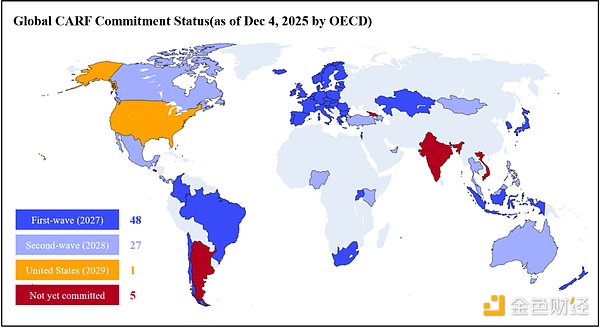
To smuggle $200 million in untaxed assets belonging to his client, American real estate tycoon Igor Olenicoff, from UBS back to the United States without leaving a trace, Birkenfeld devised a plot only a Hollywood screenwriter would dare to use: he purchased diamonds, stuffed them into a tube of ordinary toothpaste to evade customs X-rays, and then brazenly flew across the Atlantic to deliver the diamonds to Olenicoff for liquidation. In 2007, when Birkenfeld discovered he might become a scapegoat for an internal compliance purge in a bank report, he made a decision that defied the traditions of Swiss banking: he defected. He walked into the door of the U.S. Department of Justice with a list of top-secret internal emails and client names. Birkenfeld's testimony directly led to UBS paying a record-breaking $780 million fine in 2009 and unprecedentedly handing over a list of more than 4,000 American clients. This marked the death of Swiss bank secrecy laws. (Interestingly, Birkenfeld ultimately took home a bounty of 104 million.) The US Congress realized that relying on informants like Birkenfeld was far from sufficient; an automated monitoring mechanism was necessary. Thus, in 2010, the most authoritative tax law in history, the Foreign Account Tax Compliance Act (FATCA), was enacted. Its logic was simple and brutal: "Banks worldwide that want to do business with the United States must report the account balances of Americans to us annually." Seeing the immediate effectiveness of this US approach, the OECD began to replicate it. In 2014, the global standard based on FATCA—the Common Reporting Standard (CRS)—was officially born. This is why the underlying logic of CRS is very similar to checking bank statements: it assumes that wealth will eventually accumulate in bank accounts, generating interest and forming a balance. It's a monitoring system tailor-made for the "fiat currency era," aiming to expose hidden millionaires through an annual "balance snapshot." Just as everything was moving in the direction regulators hoped for, a new phenomenon called Bitcoin was quietly emerging. This CRS system, based on "balance monitoring," was about to face a completely new adversary it had never imagined. Chapter Two: The Vulnerabilities of the Old Hunting Net—Why CARF When CRS Exists? Using an AI analogy, CARF is like a high-definition camera installed 24/7 at the entrance of every compliant exchange. Its biggest difference from CRS is that CRS checks "how much money you have," while CARF checks "where you've spent your money." 2.1 The Origin and Strategic Intent of CARF The birth of CARF stemmed from the G20 countries' fear of tax base erosion. While the traditional CRS has been effective in combating offshore tax evasion, it primarily targets traditional bank accounts and custodian accounts. Crypto assets, due to their decentralized nature and peer-to-peer transfer capabilities without intermediaries, have become a blind spot for CRS. The OECD has explicitly stated that CARF aims to eliminate this blind spot by including crypto asset service providers (CASPs) in the same information reporting obligations as banks. By the end of 2025, more than 50 jurisdictions (including the UK, Canada, France, Germany, Japan, and the Cayman Islands) have committed to implementing CARF. This framework quietly began data collection in the Cayman Islands and other locations on January 1, 2026, and will conduct its first information exchange in 2027. 2.2 Comparison of CARF and CRS 2.0: From "Stock" to "Circulation" The core logic of CRS is to monitor "stock wealth," while the core logic of CARF is to monitor the circulation of wealth. Under the CRS framework, apart from the year-end balance, the tax authorities can hardly see the intermediate processes. However, under CARF, if an investor converts Bitcoin into USDT, transfers USDT to their cold wallet, or even uses cryptocurrency to purchase more than $50,000 worth of $PUNDIAI (retail payment transactions), each action will generate a report record. CARF effectively elevates the perspective from a "static balance sheet" to a "dynamic cash flow statement."
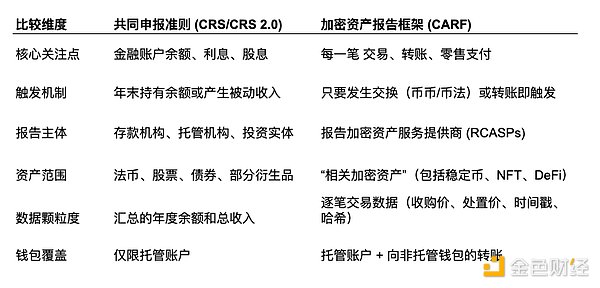
2.3 Scope of “Related Crypto Assets”
CARF’s definition of “related crypto assets” covers almost all crypto assets:
Stablecoins: Although many stablecoins claim to be alternatives to fiat currency, under CARF, they are explicitly considered crypto assets. This means that an exchange between USDT and USD may no longer be considered a “currency exchange” but a transaction, and such a transaction is a taxable event.
NFTs: While CARF primarily focuses on assets used for payments or investments, most high-value NFTs are likely to be included in the reporting scope due to their secondary market trading attributes. Tokenized Securities: Even tokenized stocks or bonds already regulated in traditional financial markets, even if they are on-chain, may be subject to both CRS and CARF coverage (although the OECD has attempted to avoid duplicate reporting by revising CRS, this overlap is difficult to avoid due to the principle of "better to err on the side of caution" in tax practice). Chapter 3. Retail Investors' Sentimentality, Wishful Thinking, and Devastation 3.1 Crypto-to-Crypto Trading: A Mandatory "Fair Price" Mechanism CARF stipulates that all exchanges between crypto assets must record their fair market value in fiat currency at the moment the transaction occurs. In the eyes of the tax authorities, "crypto-to-crypto trading" is equivalent to "selling before buying." A common misconception is: "If I exchange Bitcoin for Ethereum, as long as I don't convert it to fiat currency (USD/CNY), it doesn't count as a sale, and I don't need to pay tax." But this is just wishful thinking on the part of novice investors. CARF requires exchanges to record: "On a certain day, Zhang San exchanged 1 Bitcoin for 20 Ethereum. At that time, 1 Bitcoin was worth $50,000." In the eyes of the tax authorities, this is a taxable event of "selling Bitcoin for $50,000." Even though you don't have cash on hand, your tax bill has already been generated. CARF has completely ended the tax avoidance strategy of "using cryptocurrency to generate more cryptocurrency." After 2026 (2027 in some regions), every cryptocurrency exchange will be recorded as an asset disposal event, leaving a definite "fiat currency gain record" in your tax file, regardless of whether you convert it into fiat currency/stablecoin. 3.2 Penetrating Wallets: Transaction Hash and Address Cleaning In CARF's XML Schema, RCASP is required to report the specific type and value of transactions. Although the final rule, after strong lobbying from the industry, removed the mandatory requirement to report all non-custodial wallet receiving addresses, the internal system collects and retains information about this address and its associated beneficiaries for at least 5 years (aka the "retention rule"). This means that the tax authorities have the right to access the data at any time. If the tax authorities find that a taxpayer has a large "withdrawal" record in 2026 but has not declared subsequent income, they can send bulk information requests to exchanges to accurately obtain these external wallet addresses. When you withdraw coins from an exchange to your own wallet plugin or cold wallet, the exchange must record and report (if requested) "which address was withdrawn". This is similar to withdrawing cash from a bank. The bank not only records how much you withdrew but also tracks you and notes which safe you put the money in. Once your wallet address and your real identity are linked in the tax bureau's database, all your DeFi operations on the blockchain are essentially "naked." 3.3 Standardization of Valuation Anchoring What if the transaction involves two extremely obscure cryptocurrencies (e.g., exchanging "air coin A" for "air coin B"), and there's no fiat currency trading pair? CARF stipulates a "cascading valuation method": if asset A has no fiat currency price, the fiat currency price of asset B is referenced; if neither exists, the service provider must use a reasonable valuation method to enforce pricing based on this. In short, the system must generate a fiat currency value and send it to the tax bureau. This eliminates the possibility for users to use price fluctuations to make vague declarations when filing taxes. 3.4 Mandatory Taxpayer Identification Number (TIN) CARF requires RCASP to collect users' tax residency and corresponding Taxpayer Identification Number (TIN). However, if a user only declares their tax residency in a lower-tax jurisdiction (such as Dubai), but the exchange discovers through IP address, area code, or login logs that they frequently operate in a higher-tax jurisdiction (such as France), the exchange has an obligation to question the legitimacy of this self-certification. Chapter 4, The Trap of Retrospection: 2026 as the "Year of Exposure" Many veteran investors believe that as long as they handle their assets before the first information exchange in 2027, everything will be fine. This is incorrect. Everyone overlooks CARF's "retrospective effect," meaning that the 2027 information exchange implies submitting information from 2026. 4.1 “Beginning Balance” and Historical Audit When the Inland Revenue Department (IRD) receives the CARF data for the entire year of 2026 in 2027, they will first focus on the “Beginning Balance” or “Total Annual Transactions.” Scenario Simulation: Assume that Mr. Nakamoto, a Chinese investor, sold $10 million worth of $PUNDIAI tokens through a compliant Hong Kong platform in 2026. The platform reports the data to the IRD based on CARF data. The IRD's AI system will immediately compare Mr. Nakamoto's personal income tax returns from 2025 onwards. If Mr. Nakamoto has never previously declared holding overseas crypto assets, the source of this $10 million becomes a huge question. The IRD will use the hash value of this transaction to trace back to when these $PUNDIAI tokens were purchased. If the purchase was made in 2024, then all unreported capital gains between 2024 and 2026 will be exposed. It's worth noting that tax authorities in many countries have deployed AI-based big data analytics systems specifically designed to identify anomalies where asset holdings don't match reported income. We anticipate a major tax evasion crisis for crypto millionaires in 2026. 4.2 The Compliance Window in 2026 For investors who haven't yet complied, 2026 is effectively the last window of opportunity. Before the data gates close, investors face a difficult choice: Proactively reporting historical assets to the tax authorities can usually lead to a reduction or exemption of penalties. Under a compliant framework (such as family trusts or offshore companies), reorganize asset holdings or seek assistance from professional financial and tax institutions to rationally plan crypto assets. (Advertisement here, ad space is hotly tendered~) Chapter 5, Behind Binance's Relocation: Trading Space for Time Among a host of regulatory-friendly jurisdictions, why did Binance ultimately choose Abu Dhabi? Besides local policy support and advantages in funding channels, another important factor is the **compliance time difference**. Binance's original location in the Cayman Islands is among the first jurisdictions to commit to implementing CARF, with the first information exchange expected in 2027. This means that Crypto Service Providers (RCASPs) with CARF reporting obligations will need to collect and retain information for reporting starting in 2026. If Binance remains based in the Cayman Islands, it must immediately begin building a comprehensive CARF compliance system. Conversely, the UAE, according to the CARF implementation timeline, is among the second batch of jurisdictions to implement CARF and plans to begin information exchange in 2028. From the Cayman Islands to the UAE, Binance has secured a one-year strategic buffer period. For Binance, which serves over 300 million users, this period is of great significance: First, it mitigates early adopter risks. By observing how the first implementing jurisdictions like the UK and the Cayman Islands operate, Binance can learn from the experiences of other exchanges and optimize its own compliance strategy. Second, it allows participation in rule-making. Currently, the UAE's CARF legislation and implementation details are still being formulated. As a leading exchange with considerable influence, Binance has the opportunity to voice its opinions, consult with authorities, and exert a positive influence on the formation of localized rules. Third, it allows for system upgrades. This year provides Binance with ample time to deploy and debug a data reporting and management system that meets the complex requirements of CARF. This is what is known as "trading space for time." Chapter 6. CARF in China: Impact and Trends As one of the world's largest markets for crypto asset users, China's situation is somewhat unique. Some say that mainland China is not among the first signatories of the OECD's CARF, so mainland tax authorities cannot see cryptocurrency transactions conducted in Hong Kong—this is actually a misunderstanding. Mainland China has not yet joined or committed to implementing CARF, therefore mainland tax authorities will not obtain crypto asset transaction data of Chinese tax residents based on the CARF mechanism. However, this does not mean that mainland crypto tycoons can rest easy. Besides, mainland China is already an active participant in CRS. Although CARF targets crypto assets, if crypto assets are converted into fiat currency and deposited in banks, or held in the form of financial assets (such as ETFs), they are already within the CRS monitoring network. Furthermore, the consultation document also mentions that CARF information will be exchanged with "partner jurisdictions." Attentive readers will notice that Hong Kong is in the second tier of implementing CARF, having already initiated legislative consultations on CARF and CRS revisions and formulated a clear implementation roadmap, planning to complete legislative preparations in 2027 and begin information exchange in 2028. Under the "dual-track" crypto regulatory framework, the impact of CARF's implementation in China needs to be considered in different ways: Crypto users with Hong Kong identities are obligated to submit self-certified information to exchanges under the CARF framework. Subsequently, their crypto asset transaction data on overseas exchanges will be reported and exchanged with the Hong Kong tax authorities through an automatic exchange mechanism. This means increased transparency in assets and transactions, making it more difficult for users to evade tax obligations by leveraging the decentralized and anonymous nature of crypto transactions. Simultaneously, Hong Kong crypto exchanges, as RCASPs (Regulatory Service Providers), must strengthen KYC (Know Your Customer) requirements and establish data collection and reporting systems in accordance with CARF requirements. Failure to register, declare, conduct due diligence, or submit inaccurate information at any stage can trigger legal liability, with fines reaching millions of Hong Kong dollars. In contrast, the impact of CARF on mainland China in the short term is relatively limited. This is related to the mainland's "illegal" characterization of crypto assets. However, transparency in crypto taxation is an inevitable trend, and mainland Chinese tax residents cannot be complacent. With Hong Kong's access to CARF's global information exchange network, it is possible that mainland China will obtain relevant crypto transaction data from Hong Kong through other channels, or join CARF in the future. For mainland Chinese investors, the era of relying on Hong Kong as a "safe haven" is over. Although there may be a time lag of several years for automatic exchange, the "on-demand exchange" channel is open, and data retention rules ensure that historical records are readily accessible. Chapter 7, Survival Guide – Don't Be an Ostrich Burying Its Head in the Sand. If you ask a Korean oppa what the three unavoidable things in this world are: life and death, Samsung (a Korean entertainment brand), and taxes. As individuals caught in this tide of the times, what should we do? **Pay Attention to the Tax Consequences of Cryptocurrency Trading:** Don't naively think that you don't have to pay taxes if you don't withdraw funds. From now on, every click of "buy/sell" carries the potential for taxation. (In countries with capital gains tax) **Clean Up Your Accounts:** Clean up those "zombie accounts" on unknown small exchanges or registered with random identities. Either cancel them or withdraw your coins. Once the CARF network is fully operational, these accounts will be among the first to be subject to risk control. Understanding Cold Wallets: Cold wallets remain your last line of defense for your data, but the bridge between them is now under surveillance. When you transfer funds from Binance to a cold wallet, the transaction itself becomes a record. While the tax authorities cannot see everything in a cold wallet, they know: "This address belongs to Nakamoto Murao, who transferred 10 bitcoins into it in 2027." Pay Attention to the UAE and Hong Kong Timelines: The UAE and Hong Kong are among the second batch of regions to implement the policy (swap in 2028). This means you have roughly a year or two to adapt and plan. Using this time to learn how to comply with regulations or to find a professional tax advisor is far more practical than searching for the next "tax haven."
......
Postscript
This article thanks FinTax for their professional analysis of tax regulations and their observations and analyses of various jurisdictions, which enriched the practical perspective of this article.


 Catherine


