StrategyHolding Bitcoin is not for trading, but for permanent ownership.
Michael SaylorHe has said for nearly five years that he will never sell Bitcoin, and he has almost never wavered on this point in speeches, on social media, and in every earnings call.
2026year5Month5Day, after the U.S. stock market closed, Strategy
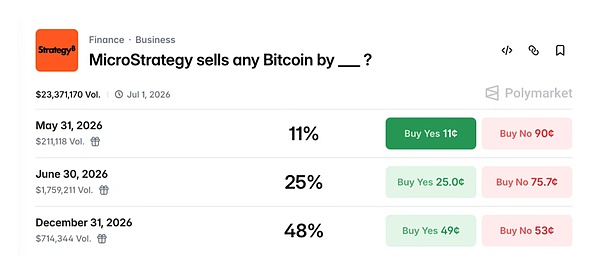
Fully transformed balance sheet
2026First quarter of 2020,
As of2026Year5Month3Day,Strategy text="">At the end of the year, Strategyhas accumulated 63.2$100 million in retained earnings; to3%. The company is required to pay approximately $1.5 billion in dividends and interest obligations annually, and currently only has approximately $2.2 billion in cash on hand, which can only cover about 18 months of expenses. The company also proposed changing the dividend payment frequency from once a month to once every two weeks, citing the need to improve product liquidity and price stability. This implies an acceleration in the pace of fixed payment obligations. Since launching its preferred stock product at the beginning of 2025, the company has made timely and full dividend payments 23 times consecutively, with a cumulative payment of over US$693 million. The operating logic of the entire STRC model is as follows: STRC is issued to raise funds, which are then used to buy Bitcoin. Once Bitcoin appreciates in value, dividends are paid out through the appreciation or sale of Bitcoin, and the cycle continues. Whether this structure can be sustained depends solely on whether the price of Bitcoin is high enough to cover financing costs and dividend payments.
When positions become tools
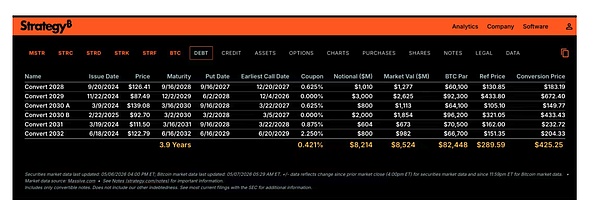
text="">1230USD 2030approximately28USD,2031approximately6Billion US dollars, 2032approximately8billion US dollars. The weighted average maturity of these debts is 3.9 years, with an average coupon rate of only 0.421%, resulting in extremely low financing costs. However, if the debt is not converted into equity by maturity, the company will have to sell Bitcoin or sell shares to repay the debt.
SaylorSaylor said in the conference call: You buy Bitcoin with credit, let it appreciate, and then sell some of the Bitcoin to pay dividends. This statement indicates that the company's core metric is no longer the total holdings, but rather the Bitcoin content per share—the ratio of Bitcoin held by the company to its total share capital. As long as selling allows this ratio to continue to grow, it's a reasonable transaction. Over the past five years, every time Strategy has increased its holdings, it has been sending the same signal to the market: Bitcoin is not meant to be sold. The conference call on May 5, 2026 conveyed another message: selling itself can also be part of a strategy. Previously, the market perception was that Strategy would hold onto Bitcoin at all costs. Now, the company's attitude has changed: selling is a reasonable option as long as it benefits the Bitcoin content per share. In the definition of Strategy, Bitcoin is transforming from an immovable reserve asset into a financial instrument that can participate in the capital cycle.


 Anais
Anais