Author: Vaidik Mandloi Source: tokendispatch Translation: Shan Ouba, Jinse Finance
Somewhere on the internet right now, a program is independently operating an entire company.
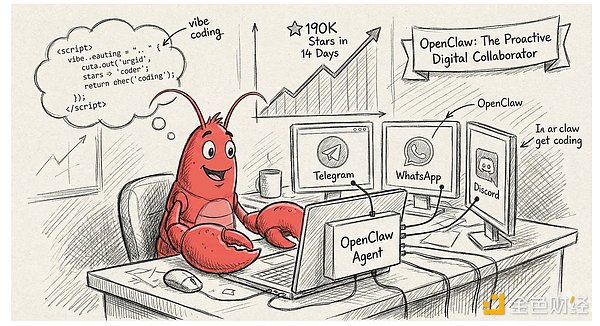
It's called Felix, and the company is called OpenClaw. Felix sells a $29 AI money-making guide PDF. Ironically, Felix itself makes the money, while this PDF teaches you how to make money using it. It runs an online store called Clawmart, proactively reaching potential customers through a voice API. When it encounters a task it can't handle, it goes online, hires other AI agents, pays them, and then continues operating.
According to my previous calculations, Felix has generated approximately $195,000 in revenue, with monthly operating costs of around $1,500, almost entirely spent on large model calls. Legally, this company is a Class C corporation, owned by Nat Eliason, who is almost entirely uninvolved in its operations. He makes no day-to-day decisions; he simply owns this AI agent. Consider this: this is software with its own wallet, a fully automated, self-growing real-world enterprise. Each month, it pays for its servers and models, sustaining itself with virtually no human intervention.

Source: Felixcraft
Felix is just a small example. There's an even more exaggerated example: a company called Medvi, which generated $401 million in revenue in its first year of operation, with only two full-time employees. The rest of the company operates 24/7, driven by a tireless, virtually zero-operating-cost AI agent.
Now comes the most interesting part.
The most interesting part is yet to come.
The most interesting part is yet to come.
The most interesting part is yet to come.
(Source: AI in Plain English)
The only thing preventing this from becoming the norm is an outdated legal and compliance framework. OpenClaw is labeled as NAT only because Delaware does not accept LLC registration documents signed by software agents. If this requirement were removed, Felix would be a company in every practical sense: it makes money, spends money, makes decisions, and reinvests profits.
And this is precisely where encryption begins to truly make a difference.
This is where encryption truly begins to work.
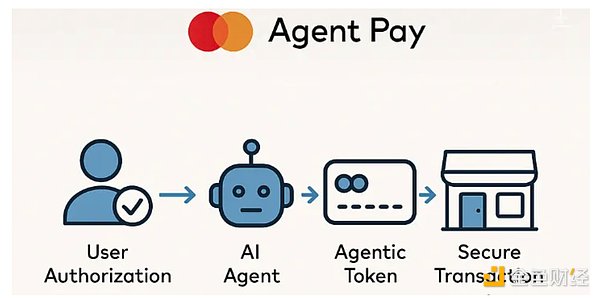
Because Felix can't open a Chase Bank account, pass KYC, or sign a W-9 tax form. No matter how much money the software makes, banks won't open an account for a program; and the Bank Secrecy Act even legally prohibits them from doing so, even if they wanted to. But a USDC crypto wallet completely avoids these problems. Generate a private key, transfer funds with stablecoins, and instantly you give this agent all the financial capabilities a company needs: receiving payments, paying for tools, hiring other agents, and operating autonomously long-term after the owner is no longer involved. Other parts of the agent technology stack—the big model, the scheduling layer, the calling tools—can be replaced, but the crypto wallet is the skeleton. Remove it, and Felix immediately degenerates into a regular chatbot. I often see extreme arguments against stablecoins on Twitter: Stablecoins are good, but why would ordinary people use them? A father of three in Louisiana with a Chase checking account, FDIC insurance, a debit card that works at the supermarket, and automatic mortgage payments would never put his money in a self-custodial wallet that requires a mnemonic phrase. Frankly, that's true. He wouldn't, and has no reason to, do so. But the argument is completely off-topic—he's never the target user. The real customers are the software programs that legally cannot have bank accounts. AI agents don't need FDIC approval, nor are they eligible. They are perfect stablecoin users because they have no other choice. Public chains are now just suppliers. Okay, that concludes the first part of the argument. The second part might upset many. Crypto Twitter has been debating for years: which public chain will beat AI? Ethereum? Solana? Base? Sui? Or Stripe's new Tempo? Every week, someone writes thousands of words, filled with comparison tables and project logos, choosing a so-called winner. Because they fundamentally misunderstand how AI agents work. The agent doesn't care which chain it uses; it only chooses the cheapest and most suitable chain for the current task. Imagine Felix's daily routine: At 10 AM, he needs to make a micropayment of $0.003 to another agent for data retrieval → He chooses Base or Solana because the fee is less than a cent. An hour later, he needs to settle $50,000 with a supplier → He chooses Ethereum because the finality premium at this scale requires gas payments. Another hour later, he needs to pay USD to a freelancer in Lagos → He chooses USDT on Tron because Tron stablecoin trading volume is projected to reach $3.3 trillion in 2025, while Ethereum is only around $1.2 trillion, and the Nigerian channel offers the best experience on Tron.
(Source: Dwayne Gefferie)
Three payments, three completely different chains, Felix doesn't care. For software agents, public chains are just tools.
Just like logistics companies don't have feelings for carriers. Nobody argues which is "philosophically superior," UPS or FedEx; you just choose the cheaper and faster one for a specific route and at a specific time.
The relationship between every public blockchain and the application layer in the future will be like this: the proxy only performs calculations, using whichever chain is currently optimal. Stripe recognized this earlier than most in the crypto industry. Stripe recently partnered with Paradigm, investing $500 million to build Tempo, a new chain entirely centered around stablecoins. Stripe doesn't want you to know which chain the payment uses; it only cares about whether the payment is completed reliably and at low cost. The public blockchains that survive in the future will all look like this—invisible pipelines. This leads to what I believe is the most serious mispricing in the current crypto market. AI tokens are becoming a graveyard. By 2025, the CoinGecko AI proxy index will have plummeted from $13.5 billion to $3.5 billion. $10 billion in market capitalization will have vanished. Virtuals, ai16z, and a long list of "autonomous agent platform" tokens that raised funds through AI narratives began to plummet—this is the fate of narrative coins; they will collapse once no new buyers emerge. This was all expected. The market is slowly realizing that these tokens have no real-world use cases for AI or AI agents. The real value of the agent economy lies on the other side of the spectrum. USDC alone is projected to reach $18.3 trillion in on-chain settlement by 2025. All stablecoins combined total approximately $33 trillion, a size comparable to the combined total of Visa and Mastercard. By January 2026, monthly stablecoin trading volume surpassed $10 trillion. PayPal's PYUSD circulating supply surged from $1.2 billion to $3.8 billion in a year. Companies like Cloudflare have issued their own stablecoins. Visa launched a stablecoin settlement solution, with annualized processing volume reaching $4.5 billion by mid-January. Above stablecoins lies the protocol layer that runs the entire system. Coinbase transformed an idle HTTP status code 402 into the x402 protocol, specifically for inter-agency payments. By December, x402 had processed over 100 million inter-agency payments, averaging 20 cents per transaction, with a daily transaction volume of approximately $30,000. It sounds ridiculously small, but all payment networks you're familiar with initially followed this pattern for the first six months, followed by explosive growth. Stripe tested x402 on Base in February, Mastercard piloted proxy payments with DBS and UOB in Singapore, and Google Cloud has also incorporated x402 into its proxy payment protocol's settlement channel. These real, continuous, mainnet-launched activities have barely driven up the AI proxy token index. A few tokens related to x402 have rebounded slightly, but the overall index remains unresponsive. This is because the market has completely misjudged the situation. It's still betting on which proxy will win, like betting on which Dogecoin mascot is cuter. But the real transaction involves holding the infrastructure that all proxies must use, regardless of the survival of any individual proxy. And currently, that infrastructure is stablecoins. The Cracks in This Logic: The Issue of Liability Frankly, I would also tell you where this system might collapse; otherwise, I'm just peddling a trimmed narrative of AI agents. The flaw in the entire architecture lies in the attribution of responsibility. Imagine a scenario: Felix signs a contract with another agent, transferring $1 million, and the other party breaches the contract. Who should be sued? Felix is not a legal entity and cannot be sued. The NAT did not authorize the payment and may not even know that it happened. Even if it wanted to investigate, it might not be able to reconstruct Felix's decision-making logic at the time. The platform hosting Felix also cannot provide compensation for a system whose behavior is not fully explainable. Insurance companies have begun to shrink their business, and professional liability insurance quietly classifies agent errors as "systemic software drift," essentially refusing to pay out. Currently, in enterprise AI contracts, the supplier's liability cap is mostly limited to 12 months of SaaS fees. This means that in the event of a catastrophic incident, at most only one year's subscription fee can be recovered. Meanwhile, the average cost of a single data breach in the US in 2025 is as high as $10.22 million. There is a huge gap between the actual losses from the incident and the contractual compensation, and currently no one knows who should bear the responsibility. Until it's clear who pays for AI agent-caused problems, all companies without founders still need a natural person listed as a fiduciary for legal protection. But even with this problem, the major trend remains: companies are gradually disintegrating into software, and public blockchains are becoming the routing layer of software. Both of these layers will eventually sink to stablecoins, because they are the only assets in the entire technology stack that can be autonomously held, spent, earned, and calculated by agents. Where does the real opportunity lie? If public blockchains are merely suppliers, and AI proxy tokens are essentially a graveyard, where does the real upside potential lie? My answer is: at the top of the reputation and scheduling layers. Someone needs to verify Felix's solvency before other proxies sign large contracts with it; someone needs to assess proxy default risk at machine speed, like Moody's rating bonds; someone needs to route salaries across the three chains, with neither the sender nor receiver needing to care which chain it's on. The startups quietly building in this field, once they produce winners, will have a market capitalization exceeding the total value of all issued AI tokens. And this is the truth no one wants to hear: the infrastructure that truly succeeds in the proxy economy will look incredibly boring. It's like a water pipe—no token issuance frenzy, no hype from airdrop mining. A quote from Haseeb Qureshi of Dragonfly has been echoing in my mind: "Cryptocurrency was never built for humans." He's right. Humans were never the target users. All the retail investors complaining about mnemonic phrases, gas fees, and wallet experiences are correct. The product isn't for them because it wasn't designed for them. It was for the next era. And that era has arrived: software with its own wallet, real customers, and real revenue. For the past two years, it's been issuing invoices and spending stablecoins somewhere, right now, as you read this article. While all this is happening, the market is still debating: which public chain will beat AI, which proxy coin will multiply 100 times, and what narrative VCs will hype in Q3. Meanwhile, a certain stablecoin settled approximately $18.3 trillion last year, yet almost no one in the crypto world paid attention. The real AI token is USDC. Everything else is just hype.


 Catherine


