Author: Zhang Feng
Technological evolution is never linear, but rather leapfrog and brutal. Every paradigm shift is accompanied by the demise of many old species and the birth of new ones. Currently, we are standing at such a critical juncture: artificial intelligence is evolving from a "tool that is called upon" to an "intelligent agent capable of autonomous action." However, as countless capital and developers flood into this field, attempting to define the future form of intelligent agents, a fundamental question emerges:What type of intelligent agent can survive?
To answer this question, we cannot only look at technical parameters, but must return to the underlying logic of the economic system, the distribution of data and power, and the ultimate form of technological integration.
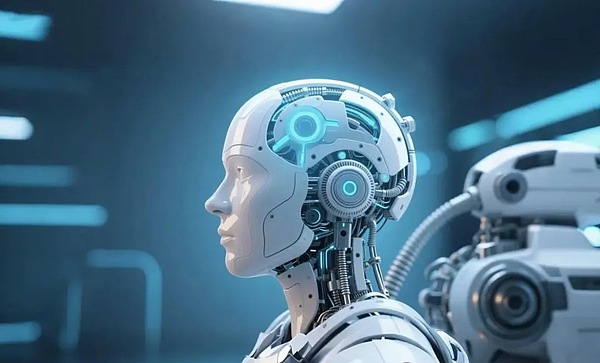
I. Intelligent Agents vs. Ordinary Applications: A Fundamental Break in Paradigm
To understand the future of intelligent agents, we must first clarify the essential difference between them and the "ordinary applications" we are familiar with. This difference is by no means a mere functional overlap, but a complete reconstruction of the underlying architecture and interaction logic.
To understand the future of intelligent agents, we must first clarify the essential difference between them and the "ordinary applications" we are familiar with. This difference is not a mere functional overlap, but a complete reconstruction of the underlying architecture and interaction logic.
A viable intelligent agent must be transparent and auditable: its core decision-making logic must be publicly verifiable, or its compliance and security audits must be completed by a third-party organization. Transparency is not a sentiment, but a necessity for building trust. At the same time, an open mechanism can also accelerate community iteration and reduce vulnerabilities and biases.
(III) Elastic Supply of Computing Power—A Balance Between Performance and Cost
Computing power is the "basic metabolism" of an intelligent agent.
The term "sufficient computing power" does not refer to unlimited computing power, but rather to the dynamic, flexible, and low-cost acquisition of the required computing power. A mature computing power market will emerge in the future. When performing complex tasks, intelligent agents can automatically lease GPU/TPU resources through computing power networks and release them after the task is completed. Intelligent agents bound to a fixed computing power environment cannot cope with sudden high loads and will eventually be eliminated. The flexibility of computing power acquisition determines the adaptability of intelligent agents. (IV) Traceable Decision-Making Chain – Clear Responsibility is Essential for Long-Term Success. When an intelligent agent makes a mistake and causes losses, the ability to hold it accountable determines its survival. An intelligent agent that survives must possess a complete and tamper-proof audit log: clearly recording the time, input data, model/rule calls, intermediate decisions, and final operations. This record can be achieved using technologies such as distributed ledgers, ensuring credible evidence and definable responsibility. An intelligent agent with a "decision black box," no matter how powerful, will be abandoned by the market because it cannot be held accountable. IV. Integration: A Long-Term Carrier for AI + Web3 + Quantum Technology Individual intelligent agents have no future. Those that survive will inevitably be nodes where cutting-edge technologies converge. (I) Integration of AI and Web3: Intelligent Agents as On-Chain Autonomous Entities Web3 provides decentralized identity, asset, and value exchange protocols; AI provides autonomous decision-making and reasoning capabilities. The combination of these two elements gives rise to on-chain intelligent agents. These intelligent agents possess decentralized identities and can hold assets, complete payments, and sign smart contracts with other entities on the blockchain. They are no longer merely human tools, but autonomous participants in the digital world. For example, decentralized logistics intelligent agents can autonomously bid, pledge margins, automatically settle accounts, and compensate for defaults, all driven by algorithms and incentive mechanisms. (II) Quantum Technology Integration: Long-Term Security and Computing Power Upgrades Quantum computing will challenge existing encryption systems, but it also brings breakthroughs in capabilities. For intelligent agents to survive long-term, they must make forward-looking plans: Security Defense: Gradually adopt post-quantum cryptography algorithms to protect long-term sensitive data and communication security, preventing the risk of "storing now, cracking in the future"; Capability Enhancement: After the practical application of quantum computing, it can be used to solve complex optimization, molecular simulation, risk assessment, and other difficult problems, forming a competitive advantage. (III) The Products of Integration: Evolvable, Trustworthy, and Scalable AI provides the brain (perception, reasoning, decision-making); Web3 provides trust and value transfer (identity, assets, incentives); Quantum technology provides long-term security and future computing power upgrades. Such intelligent agents can survive and evolve over a long period in open, complex, and uncertain digital environments. V. Those that survive are "autonomous intelligent agents" The answer isn't the most flashy in terms of features, nor the one with the largest short-term user base, but rather an intelligent agent that meets the criteria of local data processing, transparent and auditable operation, elastic computing power supply, and traceable decision-making chains, while deeply integrating Web3 and quantum technology security and capabilities. We call this—an autonomous intelligent agent. An autonomous intelligent agent is a user's sovereign agent in the digital world, loyal to user goals, protecting user privacy, with auditable behavior and definable responsibility, and not dependent on a single platform or cloud vendor. It collaborates with other intelligent agents through open protocols to form a trustworthy and efficient intelligent economic network. Those closed, black-box "non-autonomous intelligent agents" that appropriate user data and are strongly bound to centralized platforms may initially attract attention with complex functions, but will ultimately perish due to a collapse of trust, regulatory penalties, or an untraceable incident. The future of intelligent agents is not a simple technological arms race, but an institutional evolution concerning the attribution of power, the definition of responsibility, and the distribution of value. Only intelligent agents that clearly answer the question "Whose intelligent agent is this?" and place user sovereignty at the core can survive and shape the digital future of each of us.


 Brian
Brian

