Microsoft Intensifies Pursuit in AI Race with Release of New Cloud and Windows Features in May
As the AI Race intensifies, Microsoft unveils a suite of new AI capabilities designed for deployment on both PCs and cloud platforms.
 Catherine

Authors: Wei Xincheng, Cui Rong, Li Chong
Japan's virtuous cycle of inflation has become relatively stable, and the Bank of Japan is about to raise interest rates again. The global market turmoil following Japan's interest rate hike last summer was mainly caused by US factors such as rising recession expectations and the erosion of the AI narrative. The reversal of carry trades was only a secondary factor that exacerbated risk aversion at that time, and last year's "Black Monday" is unlikely to be repeated this year.
Against the backdrop of policy differences between the US and Japanese central banks, US factors are the core theme of current global liquidity and dollar asset pricing. Currently, market skepticism about the AI narrative is concentrated in a few companies with more aggressive business models, while most AI leaders with more stable financial conditions can still maintain market trust. The industrial intelligence boom should continue to support the performance of US stock leaders in the short to medium term.

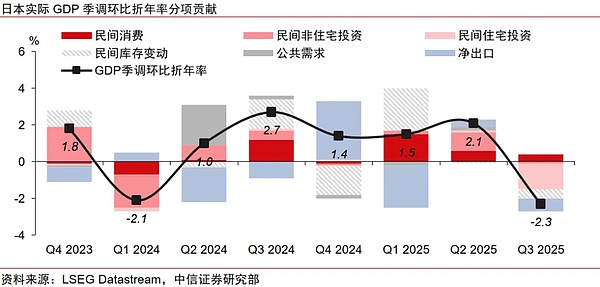
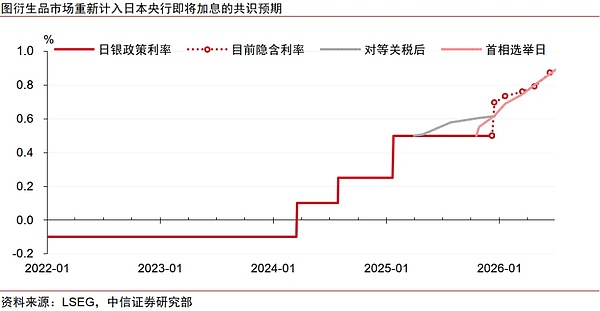
Many investors are still wary of the "Black Monday" following the Bank of Japan's interest rate hike last summer, worrying whether a new rate hike will again "bring down" global markets.
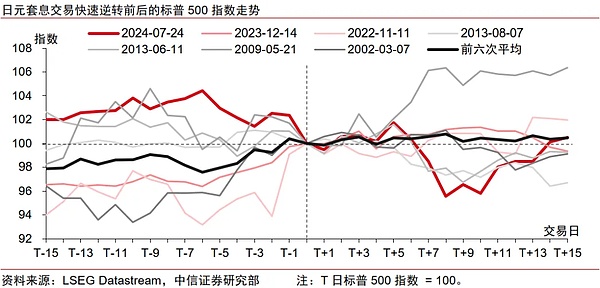
By summarizing the experience of seven rapid reversals of yen carry trades since the beginning of this century, we find that while rapid reversals of yen carry trades can indeed suppress the performance of US Treasuries, their impact should not be exaggerated. Their disturbance to US stocks is usually short-lived, and the spillover effect of a jump in long-term Japanese bond yields is limited to major bond markets and Southeast Asian stock markets. Furthermore, overseas funds may not necessarily flow back to Japanese equity and bond assets after the Bank of Japan raises interest rates.
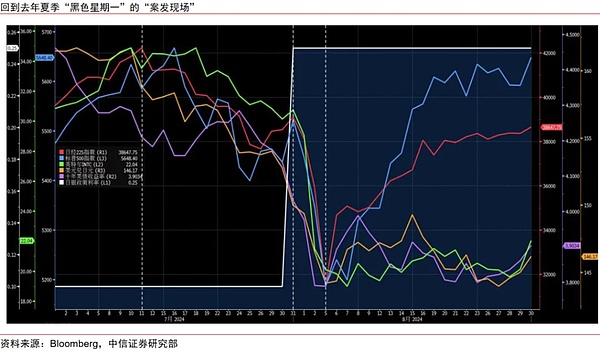
Looking back at the timeline, we believe that last summer's "Black Monday" was mainly caused by US factors such as rising recession expectations and a wavering AI narrative, while the reversal of yen carry trades was only a secondary factor that exacerbated market risk aversion at the time.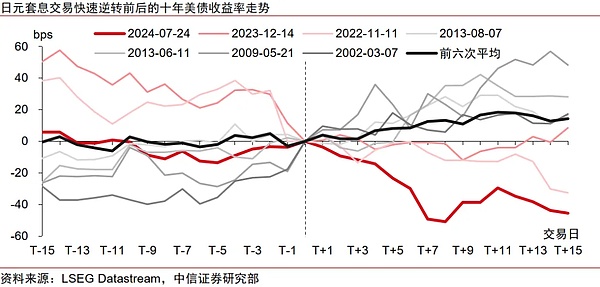
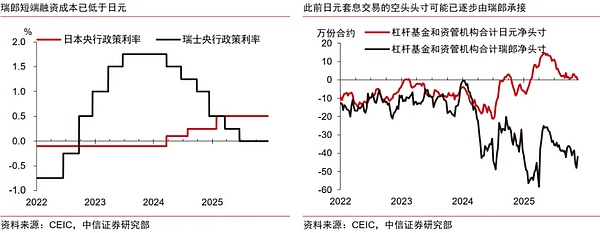
On the one hand, unlike last year, the short-term funding cost of the Swiss franc is now lower than that of the yen, and the Swiss National Bank may intervene in the foreign exchange market to promote the depreciation of the Swiss franc. Therefore, the yen is no longer the preferred funding currency for global carry trades, and existing yen positions in carry trades may have been gradually absorbed by the Swiss franc.
On the other hand, if previous experience still holds true, then even if the yen carry trade reverses again, the potential impact of the Bank of Japan's interest rate hike on global market liquidity should not be too drastic.
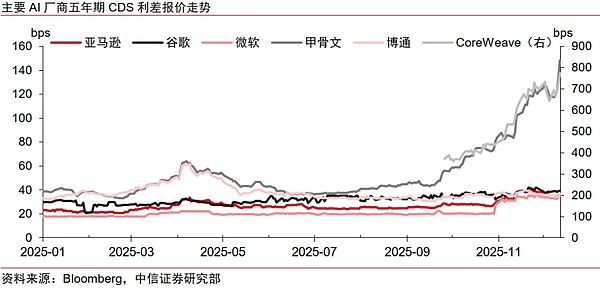
Regarding US stocks, the market is constantly concerned about the fragility of the AI narrative. Recently, the five-year CDS spreads of Oracle and CoreWeave have risen significantly. However, the CDS of most other leading companies in the AI industry chain remain relatively stable. This indicates that market concerns about an AI bubble may be concentrated on a few companies with more aggressive business models, while companies with more stable finances can still gain market trust.
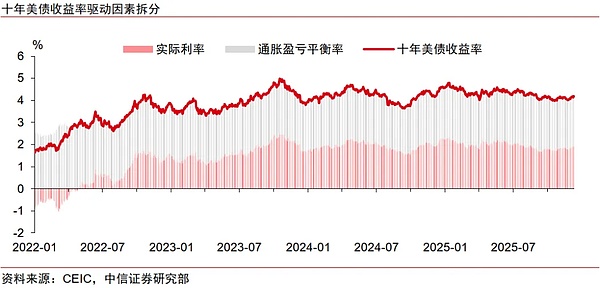
In an environment where the Fed's rate-cutting cycle is not yet over, the overall financial risk of the AI industry chain may be relatively small, and the industrial intelligence boom should continue to support the performance of leading US stocks in the short to medium term. Regarding US Treasuries, the Fed has a strong ability to stabilize employment during this round of risk-management rate-cutting cycle, and the resilience of the US economic fundamentals should continue to support real interest rates. Long-term US Treasuries do not offer much investment value, while short-term US Treasuries may benefit from the technical improvement in liquidity brought about by reserve management purchase operations (RMP). Therefore, short-term bonds are better than long-term bonds.
As the AI Race intensifies, Microsoft unveils a suite of new AI capabilities designed for deployment on both PCs and cloud platforms.
CatherineThe SEC's warning to Uniswap signals a significant shift in crypto regulation, potentially impacting DeFi platforms and blockchain adoption.
 Miyuki
Bitcoin ETFs see resurgence with $123.7 million inflow, led by FBTC.
MiyukiBitcoin ETFs attract retail investors but lack institutional support. VanEck CEO highlights market maturation challenges. Bitcoin's role in investment portfolios remains nuanced amidst global market influences.
 Weiliang
Bitcoin's impending halving spurs interest in related tokens, with traders eyeing potential gains amidst evolving narratives. Increased attention on Bitcoin ecosystem tokens like RUNE, STX, and ORDI underscores a broader shift towards alternative assets within the cryptocurrency market.
 Alex
AlexSTEPN launches a 100 million FSL Points airdrop ahead of a partnership announcement, rewarding loyal users with GMT tokens and exclusive rewards.
MiyukiWithdrawals surge as MarginFi CEO resigns amid controversy. Competitors accuse of wrongdoing, while MarginFi defends actions. Users left uncertain about MRGN token launch.
AlexGrayscale's Bitcoin ETF is set to reduce its fees as the market matures, according to CEO Michael Sonnenshein.
MiyukiInvestors can buy tokenized shares of a new Hilton hotel in El Salvador on the Bitcoin Liquid Network, marking a milestone in the country's capital markets.
WeiliangRussian police seized 3,200 crypto mining rigs in Siberia. Operators face criminal charges for stealing $2.1 million worth of electricity.
Alex