第10周链上数据:上涨空间仍然存在,同时应做好适当风控
 Miyuki

Author: Zhou, ChainCatcher
Many people believe that crypto VC is heading for its twilight.
Over the past decade, crypto VC has been highly homogenized—crowding into the same sectors, telling the same stories, and vying for the same projects. While seemingly vibrant, the industry is actually fragile.
But what is happening now may be one of the most anticipated moments since the industry's inception: the market is truly differentiating for the first time.
At the end of February 2026, two fundraising announcements appeared one after the other.
On one hand, Dragonfly Capital has completed its fourth fund raising, totaling $650 million, focusing on stablecoins, on-chain financial infrastructure, and the tokenization of real-world assets. On the other hand, Paradigm is seeking up to $1.5 billion in funding for its new fund, expanding its investment scope from crypto to cutting-edge technologies such as AI and robotics. Both are top-tier venture capital firms in the crypto industry, both operating during a downturn, so why have they taken such different paths? The question becomes even more interesting if we also consider a16z Crypto. These three funds represent three drastically different answers offered by crypto VCs in the face of industry challenges. **Guardianship: a16z Crypto's Long-Term Logic** In the crypto VC fundraising landscape, a16z Crypto has long held a top position. This is Andreessen Horowitz's (a16z) dedicated crypto investment fund line, having completed four rounds of fundraising since 2013, totaling over $7.6 billion, making it one of the world's largest crypto funds in terms of fundraising size. Earlier this year, a16z completed a new round of fundraising totaling $15 billion, spanning multiple areas including infrastructure, application layers, and growth funds, and listing the intersection of AI and crypto as one of its key investment directions. Chris Dixon, a partner at a16z Crypto, views blockchain as the next infrastructure of the internet, believing that the crypto industry is in a long "foundational period," much like the neural network paper published in 1943 is to AI today; true mainstream adoption requires decades of groundwork. Dixon has publicly stated that a16z Crypto's current holdings represent 95% of its historical investments, because in venture capital, selling quality assets prematurely is the worst decision. The team's annual crypto industry report consistently sends a signal to investors: even in a market downturn, we remain committed to understanding what's happening in the industry. a16z Crypto targets long-term institutional investors in the crypto fundraising arena—old money with a deep faith in the industry. For them, as long as they still believe in the future of crypto, a16z Crypto is a natural choice.
Dragonfly was founded in 2018, starting as an early-stage crypto VC connecting the Asian and American markets. Its first fund was only $100 million, and its core competitive advantage at the time was the co-founders' ability to leverage geographical arbitrage between the two markets.
Since 2019, Dragonfly has gradually expanded into the secondary market, managing liquidity and building its own trading team. This not only serves as a risk hedging tool but also provides real-time market data for primary market investments, becoming a supplementary perspective for project evaluation.
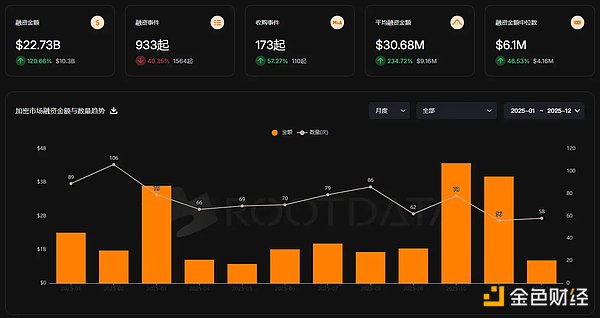
In 2022, Dragonfly acquired Metastable, a crypto hedge fund co-founded by Naval Ravikant in 2014, bringing it under its wing. This created three parallel business lines: Dragonfly Ventures (primary investment), Dragonfly Liquid (liquidity strategy), and Metastable (hedge fund). The core difference between Dragonfly and pure primary crypto funds lies in the combination of primary VC judgment and secondary market trading capabilities. However, building this system was not an overnight process. Building an investment system spanning both primary and secondary markets means simultaneously constructing two completely different decision-making frameworks, risk control systems, and talent structures—primary markets require in-depth technical judgment of early-stage projects, while secondary markets require precise quantitative capabilities in understanding market microstructures. Dragonfly's previous external recruitment clearly required candidates to possess expertise in delta-neutral hedging and derivatives inventory risk management. Such talent is scarce in the crypto industry, and recruiting from traditional financial institutions requires a lengthy adaptation period. This trading system is a barrier that Dragonfly has built over many years, and it's also the most difficult aspect for other funds to directly replicate. Today, Dragonfly is a transaction-driven institution spanning both primary and secondary markets, managing approximately $4 billion in assets, with a portfolio including unicorns such as Ethena, Polymarket, and Monad Labs. However, behind this success lies a less than optimistic industry trend. According to RootData statistics, the primary crypto market completed $22.73 billion in financing in 2025 (excluding post-IPO and debt financing), a 120.6% increase compared to 2024. However, in terms of the number of financing events, there were only 933 events throughout the year, a 40.3% decrease compared to the previous year, marking a five-year low, and the monthly number of financing events showed an almost unilateral downward trend. The total amount of financing is increasing, but the number of projects receiving financing is decreasing, meaning that money is becoming increasingly concentrated, leaving less and less room for small and early-stage projects.
Dragonfly Managing Partner Haseeb Qureshi believes that past experiments with generalized crypto applications lacking financial attributes have been proven false by the market. The new fund will focus on stablecoins, DeFi, and on-chain financial services.
He stated that the recent growth of investments in Ethena, Polymarket, Rain, and Mesh speaks volumes, "The reach of crypto is about to explode, and we want to support the founders at the heart of it all."
Dragonfly Managing Partner Haseeb Qureshi believes that past experiments with generic crypto applications lacking financial attributes have been proven false by the market. The new fund will focus on stablecoins, DeFi, and on-chain financial services.
He said that the growth of recent investments in Ethena, Polymarket, Rain, and Mesh speaks volumes, "The reach of crypto is about to explode, and we want to support the founders at the heart of it all.
Hack VC Managing Partner Alexander Pack (former Managing Partner of Dragonfly) stated that KKR and Bain Capital have both shifted from pure private equity investment to credit and public stocks, and a16z has also established funds targeting various segments of the technology sector. Paradigm's move, like the trend across the industry, signifies that the company is maturing and reintegrating into the broader technology landscape.Putting the three funds together reveals a clear logical divergence.
Each of them answers the same question: During a crypto industry downturn, what allows you, as a fund, to continue existing? a16z Crypto's answer is scale and conviction. Large enough to weather cycles, research deep enough to represent the industry, consistently conveying confidence to the market. Dragonfly's answer is capability and focus. Deeply involved in crypto financialization, using trading capabilities to compensate for the limitations of the primary market, maintaining fund activity during periods of project scarcity. Paradigm's answer is narrative and breaking boundaries. Using a new story of AI and crypto integration to attract investors unreachable by traditional crypto VCs, expanding its boundaries from one industry to a larger wave of technological convergence. Three funds, three different responses. No single paradigm is the final one, nor can any paradigm be easily replicated—ultimately, the stories that can be told are determined by the team's DNA. This may be a sign that crypto VCs are maturing; no longer are thousands crowding onto the same path, but rather each finding its own way. Homogeneous industries are fragile; only when different species emerge can the market truly thrive.MiyukiIf you want to know the potential of PlatON (LAT) in the future, then here is PlatON (LAT) price prediction for 2024 to 2050. Keep reading to find out more on PlatON price prediction.
 Anais
Anais Alex
AlexTether assisted U.S. authorities in seizing $1.4M from a tech scam, demonstrating its commitment to fighting financial fraud in the cryptocurrency industry.
MiyukiFederal court denies Gemini and Genesis' motion to dismiss SEC case over Gemini Earn program, finding it offered securities under Howey and Reves tests.
 Weiliang
US authorities aim to return $2.3M in cryptocurrency to 37 scam victims, following a civil forfeiture action. Similar efforts target other scam cases.
AlexBlock's Bitkey Bitcoin wallet, with its unique design and user-focused features, is now available globally, empowering users to control their Bitcoin holdings independently.
MiyukiFinCEN reports $165M in potential crypto dealings tied to Hamas, raising concerns over terrorist groups exploiting virtual assets.
WeiliangApril's twin court dates will shape XRP's fate, with investors optimistic for a favorable ruling.
AlexSEC charges 17 over $300M crypto Ponzi targeting Latinos across borders.
Alex