Bitget x AB 嘉年华:瓜分价值 350 万美元的 235,502,000 $AB
为庆祝 $AB 的上线,Bitget 联合 AB DAO 推出了 PoolX & CandyBomb 双重空投活动,覆盖 BGB、BTC、ETH 资产持有者以及充值和交易用户,数万名用户将有机会获得总计 235,502,000 $AB 的空投奖励,价值超过350万美元。
 Alex
Alex

Author: Zhou Hao
Abstract:
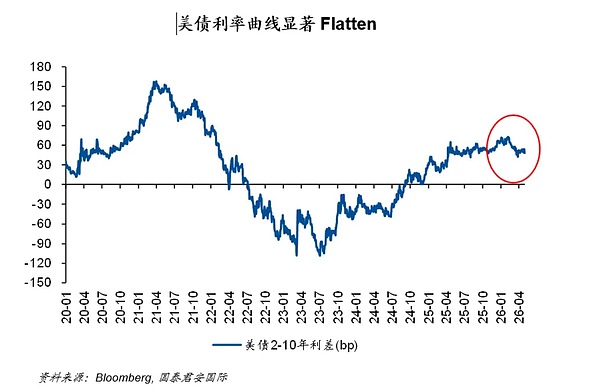
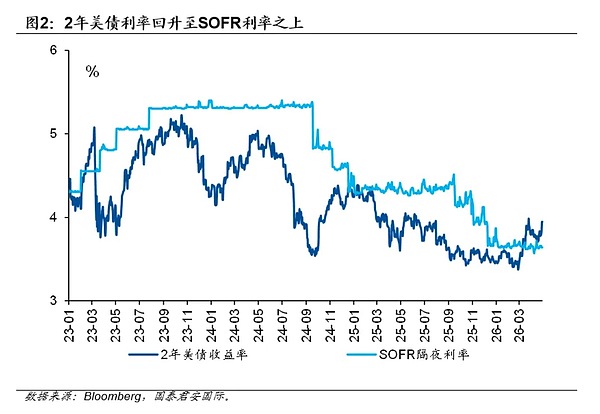
The FOMC meeting last night and this morning,judging from the wording of the statement, the voting structure, and the post-meeting statements, the overall tone was clearly hawkish, exceeding the market's previous expectations of a "mild and neutral" stance. The most notable feature of the meeting was the highly divided voting results. Four dissenting votes, a record high in over thirty years, were cast, with three regional Fed presidents explicitly opposing maintaining an "accommodative bias" in the statement, while another governor advocated for an immediate rate cut. This division reinforced market interpretations that, at this stage, the FOMC remains highly wary of prematurely signaling easing. Powell himself acknowledged a subtle shift in the committee's stance and did not rule out adjusting policy guidance as early as the next meeting. Choosing to release hawkish signals at the end of his term is difficult to interpret simply as a response to short-term economic data. It's more like Powell's final commitment to his core principles—maintaining central bank independence and firmly anchoring inflation expectations. Against the backdrop of a political cycle shift and increasing external pressure, he clearly hopes to avoid the market misinterpreting the Fed as preparing to shift course before inflation is fully under control through a clear and restrained stance. This aligns with his long-term policy orientation and can also be seen as a "systemic safeguard" he leaves for his successor. The financial markets reacted swiftly. US Treasury yields rose significantly, particularly at the short end, interest rate expectations were repriced, the probability of a rate cut this year was greatly reduced, and the market even began discussing the possibility of further rate hikes in the longer term. Geopolitical risks amplified this hawkish interpretation. As the Iran war enters its third month and oil prices rise to near-record highs, the Federal Reserve, unusually, mentioned the dual risks to inflation and employment in its statement. However, overall, these are more reinforcing factors than the root cause of a shift in stance. Looking ahead, as Powell gradually fades from the central stage, the policy reins will be handed over to Warsh. The challenge of this new phase lies in balancing the political environment with central bank independence, coordinating the balance sheet reduction process with the interest rate path, and managing the pace between declining inflation and economic slowdown. Compared to these complex issues, Powell's "last meeting" appears remarkably direct and resolute—ending with a hawkish stance may be the most appropriate way for him to say goodbye. Last night and this morning's FOMC meeting was destined to be more than just a routine interest rate decision. As his term draws to a close, Powell has left a distinctively personal mark on his chairmanship: **interest rates remained unchanged, but the stance was clearly hawkish, even more so than the market had anticipated.** This choice is less an immediate assessment of the economic outlook and more a longer-term, institutionalized expression. On the surface, the policy outcome is not complex: the Fed kept interest rates within the 3.50%–3.75% range, consistent with most institutions' assessment of a "wait-and-see" approach. However, what truly triggered a strong market reaction was the wording of the statement and the voting results themselves. **Four dissenting votes represent a level of divergence not seen in over thirty years; more importantly, the opposition primarily focused on rejecting the "easing bias," rather than advocating for further easing.** This structural division, to some extent, reinforced the hawkish nature of the policy stance. Powell's post-meeting remarks did not attempt to "reassur" the market. He explicitly acknowledged a subtle shift in the committee's stance and did not rule out the possibility of completely removing the dovish bias at the next meeting. In a meeting considered a "farewell performance," such a statement was particularly significant. For an outgoing chairman, choosing to end with a hawkish stance is hard not to interpret as a proactive and sober decision. Behind this decision lies Powell's consistent core concern—maintaining the central bank's independence and firmly controlling inflation expectations. Against the backdrop of an impending political shift and rising external interference, he clearly wanted to leave a clear, even slightly hawkish, policy signal: the Fed's decision-making logic should not be swayed by short-term sentiment, nor should it compromise prematurely to potential political pressure. From this perspective, this meeting may have been exactly what Powell, as the head of the central bank, "most wanted to do," and a principled adherence he made at the end of his term. The market quickly grasped this. US Treasury yields rose sharply after the decision was announced, with a particularly strong reaction at the short end. The two-year yield recorded its most significant FOMC decision-day increase since 2022, and long-term yields also rose to a one-month high. Interest rate expectations have been repriced, with rate cuts this year almost marginalized. Instead, the tail risks of rate hikes have been re-incorporated, and some funds are even discussing the possibility of further tightening in the longer term, as late as 2027. The equity market is clearly under pressure, with interest rate-sensitive sectors bearing the brunt, reflecting concerns about a potential tightening of financial conditions. Of course, the external environment also provides a realistic backdrop for this hawkish interpretation. The Iran war has entered its third month, oil prices have climbed to a near four-year high, and the Federal Reserve, in its statement, unusually mentioned the dual risks to inflation and employment simultaneously. However, it's important to note that this conflict is more like an amplifier than a fundamental cause of the shift. Even without geopolitical disturbances, the voting structure and the language of the statement clearly demonstrate the FOMC's wariness of prematurely releasing easing signals. More noteworthy is the Federal Reserve after Powell. **Although he will remain in his post as a board member, policy leadership will ultimately be handed over to Warsh.** Rather than short-term labels like "hawkish," the real challenge lies in balancing rising political pressure with central bank independence, coordinating interest rate path and balance sheet policy in the context of incomplete balance sheet reduction, and finding a credible turning point between declining inflation and economic slowdown. Compared to these complex and thorny issues, Powell's final meeting appeared simple and restrained: **He prioritized inflation control and institutional independence, and adopted a hawkish stance to conclude his term as chairman.** This may not be reassuring for the market, but from the perspective of central bank history, such a farewell may not be the most appropriate way for him.
为庆祝 $AB 的上线,Bitget 联合 AB DAO 推出了 PoolX & CandyBomb 双重空投活动,覆盖 BGB、BTC、ETH 资产持有者以及充值和交易用户,数万名用户将有机会获得总计 235,502,000 $AB 的空投奖励,价值超过350万美元。
AlexTo celebrate the listing of $AB, Bitget (bitget.com) and AB DAO have launched the PoolX & CandyBomb dual airdrop event, rewarding BGB, BTC, ETH holders as well as deposit and trading participants. Tens of thousands of users will have the chance to win a total of 235,502,000 $AB, valued at over $3.5 million.
Alex2025 年 3 月 3 日,Bitget Earn 正式上线 AB 理财宝,为用户提供高收益理财选择。即日起,申购 AB 理财宝产品,可享受高达 50% 年化利率,额度有限,先到先得!
AlexOn March 3, 2025, Bitget Earn officially launched AB Savings, offering users a high-yield investment option. Today, users can subscribe to AB Savings and enjoy up to 50% APY. Limited quota available—first come, first served!
AlexRonaldinho’s STAR10 token jumped 150% after he renounced ownership and locked tokens to boost security. Despite scam-related challenges, he acted swiftly to protect its legitimacy. However, under scrutiny over tokenomics and cybersecurity, STAR10 has since plunged 55%. Was it destined for success or failure?
 Catherine
Kaitlyn Siragusa, known as Amouranth, recently reported an armed robbery at her Texas home, allegedly by crypto thieves. In November, she revealed owning 211 Bitcoin, worth over $20 million. Given her openness about her wealth, could this have made her a target for the heist?
 Kikyo
KikyoProton's study reveals a rise in government requests for user data, often backed by search warrants or court orders. However, countries like France, Malta, and the Netherlands have not seen a similar increase in such demands.
CatherineTrump’s trade war spurred a market downturn, wiping out billions in a day. Bitcoin fell below $85,000, Ethereum dropped 11%, and crypto lost $500 billion, erasing gains from his US Crypto Reserve announcement. Is this a brief dip or a deeper decline?
KikyoMelania Trump joined a roundtable discussion at the US Capitol on 3 March 2025, about the ‘Take It Down Act,’ which strengthens protections for victims of non-consensual sexual image distribution, including AI-generated deepfake pornography.
CatherineReddit co-founder Alexis Ohanian bids for TikTok US with a bold Web3 vision, proposing the Frequency blockchain to let 170 million users control their data. Game-changer or just another tech trend?
Catherine